This is one of the most important questions to be asking, and it deserves its own post, which I’m currently working on.
The short answer to your question is I believe that fixation as used in Nectome’s preservation methods preserves almost all proteins and other biomolecules present in the entire body. And because fixation is very comprehensive, I think that it’s likely to comprehensibly capture important information contained within the neuron and surrounding tissue, including things we don’t currently understand.
Why do I believe in the comprehensiveness of fixation?
Here’s a model of a synapse with about a third of its proteins (the ones involved in vesicle transport) shown (Wilhelm 2014):
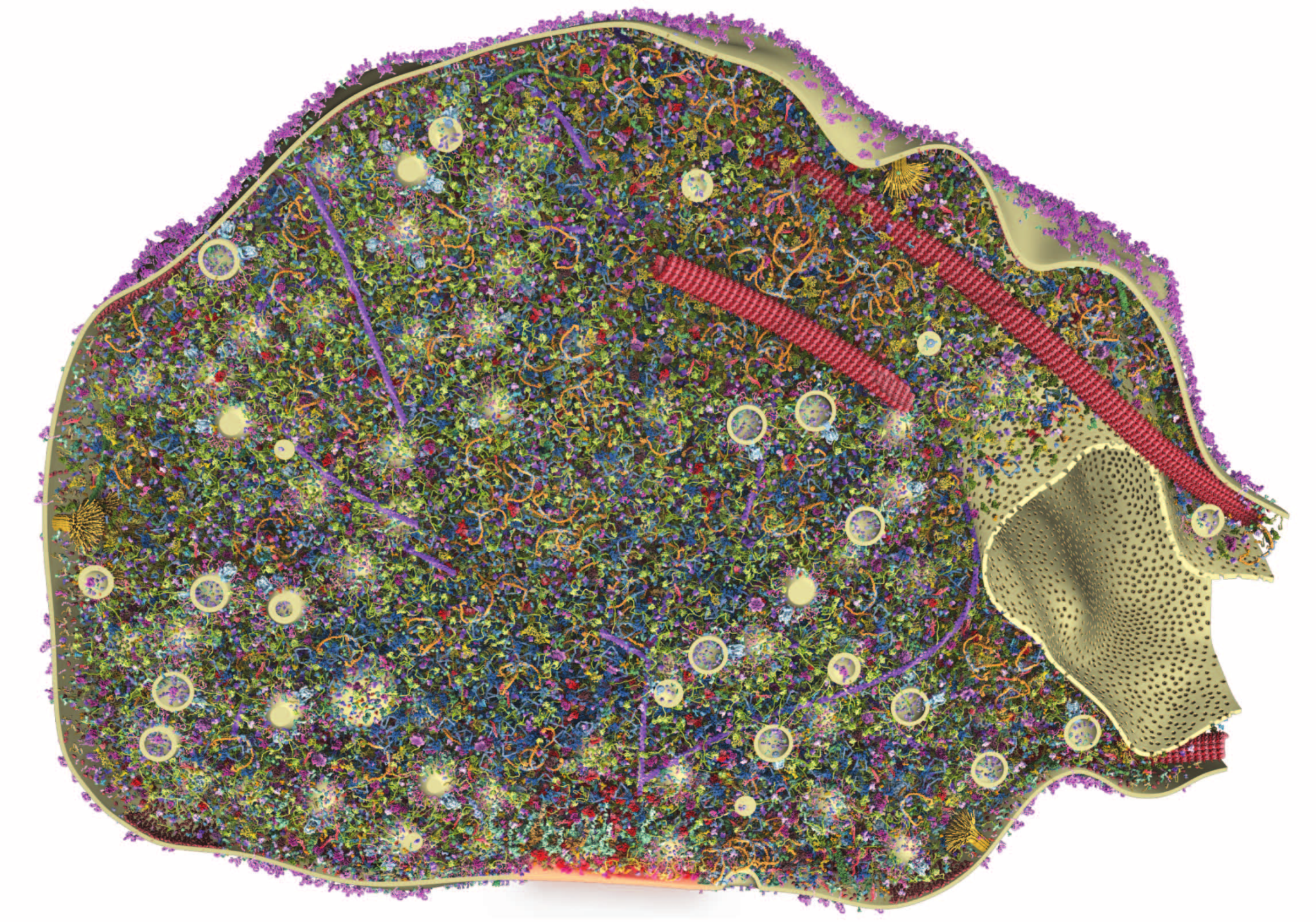
A synapse is the “business end” of a neuron. It’s the thing that changes in response to memory formation, it’s the bridge that transmits action potentials from one neuron to another. A single synapse is around half a femtoliter in volume, that’s about a one quadrillionth the size of the whole brain. I didn’t appreciate this when I first started preserving brains, but a synapse (as well as every cell in the body) is absolutely FULL of proteins, as you can see in the picture above, which again is only showing around 1/3rd of the proteins. Before I saw images like this, I thought that cells were mostly water with proteins elegantly doing their thing, with lots of “elbow room”. After seeing what these things actually look like I find myself surprised that cells are even liquid at all instead of solid peptide blocks. My intuition about cells is now that they’re already right on the edge of being solid already, and it barely takes anything to nudge them the rest of the way: think egg-whites becoming solid when cooked.
With this context, there’s three core things that I think about when it comes to the comprehensiveness of fixation:
A first-principles chemistry argument: You probably couldn’t see a single molecule of glutaraldehyde if you tried to accurately draw it in this picture above—glutaraldehyde has a molecular weight of ~100 and these proteins are more like ~30,000. When you flood the vascular system with glutaraldehyde, it crosses cell membranes in seconds and starts crosslinking proteins to themselves and to other proteins. In less than two minutes after glutaraldehyde enters a cell, it forms a gel that traps essentially all proteins, DNA, etc in-place (Huebinger et. al. 2018).
Before fixation, the proteins already aren’t crossing the cell / synaptic membrane or else they would have already crossed. Binding them to themselves and each other makes it almost impossible to move within the cell, restricting them further.
We can still see proteins after fixation: The entire field of immunohistochemistry is built on measuring the positions and amounts of proteins in cells using antibody staining. And one of the first steps of preparation of tissue for immunohistochemistry is to fix proteins with aldehydes. Check out the Supplemental Figures from Wilhelm 2014. Those researchers studied the vesicle transport proteins that make up about 1/3rd of the total proteins by weight in a synapse. That’s ~300,000 total proteins divided into 62 different kinds of proteins. (A synapse has around 1,000-2,000 different kinds of proteins and ~1,000,000 total proteins in that half a femtoliter.) For each of those 62 proteins, they used antibodies after fixation to find where they are inside the synapse. That shows that the proteins are still there and that they’re still even identifiable with antibody labeling.
Bulk measurements can’t measure a difference in proteins content between fixed vs frozen tissue: Check out this paper: Proteome, Phosphoproteome, and N-Glycoproteome Are Quantitatively Preserved in Formalin-Fixed Paraffin-Embedded Tissue and Analyzable by High-Resolution Mass Spectrometry. These guys took rats and measured the protein content of fresh-frozen brain tissue vs the protein content of brain tissue that they paraffin embedded, which involves pretty harsh chemical treatment after initial aldehyde fixation, including total removal of all water via alcohol and xylene dehydration, and infiltration of paraffin wax into the tissue. Here’s their results:
Figure 2. Comparison of FFPE-FASP and FASP (the method used to measure proteins) protocols using FFPE (formaldehyde-fixed and paraffin embedded) and fresh (frozen) tissue samples. Yields of (A) proteins and (B) peptides obtained from FFPE and fresh and samples. Error bars represent standard deviation (n ) 4). (C) Protein extracts from 100 µg wet tissue that was either FFPE treated or fresh were separated by SDS-PAGE and Coomassie stained. (D) Overlap of proteins identified from FFPE and fresh samples. (E) Frequencies of amino acid residues in identified peptides. (F) Subcellular distribution of identified proteins using GeneOntology annotations. From (Ostasiewicz et. al. 2010). Bold parts are my additions for clarity.
This is a bulk measurement, essentially measuring whether proteins are extracted “in bulk” after chemical fixation + really harsh chemical treatment afterwards. They don’t find any measurable difference between the samples in terms of protein content. They don’t find any difference in amino acid distribution. The SDS-PAGE results are a little blurred after fixation and have extra “heavy” stuff, which is exactly what you’d expect from crosslinking. Protein content after fixation is my second-favorite null result in science (my favorite is neurological differences after DHCA).
Take a look at the preservation in the demo at https://nectome.com/end-to-end/. Here’s a neuron, preserved with our method, witnessed by Andrew Critch, and stored at 60°C for 12 hours.
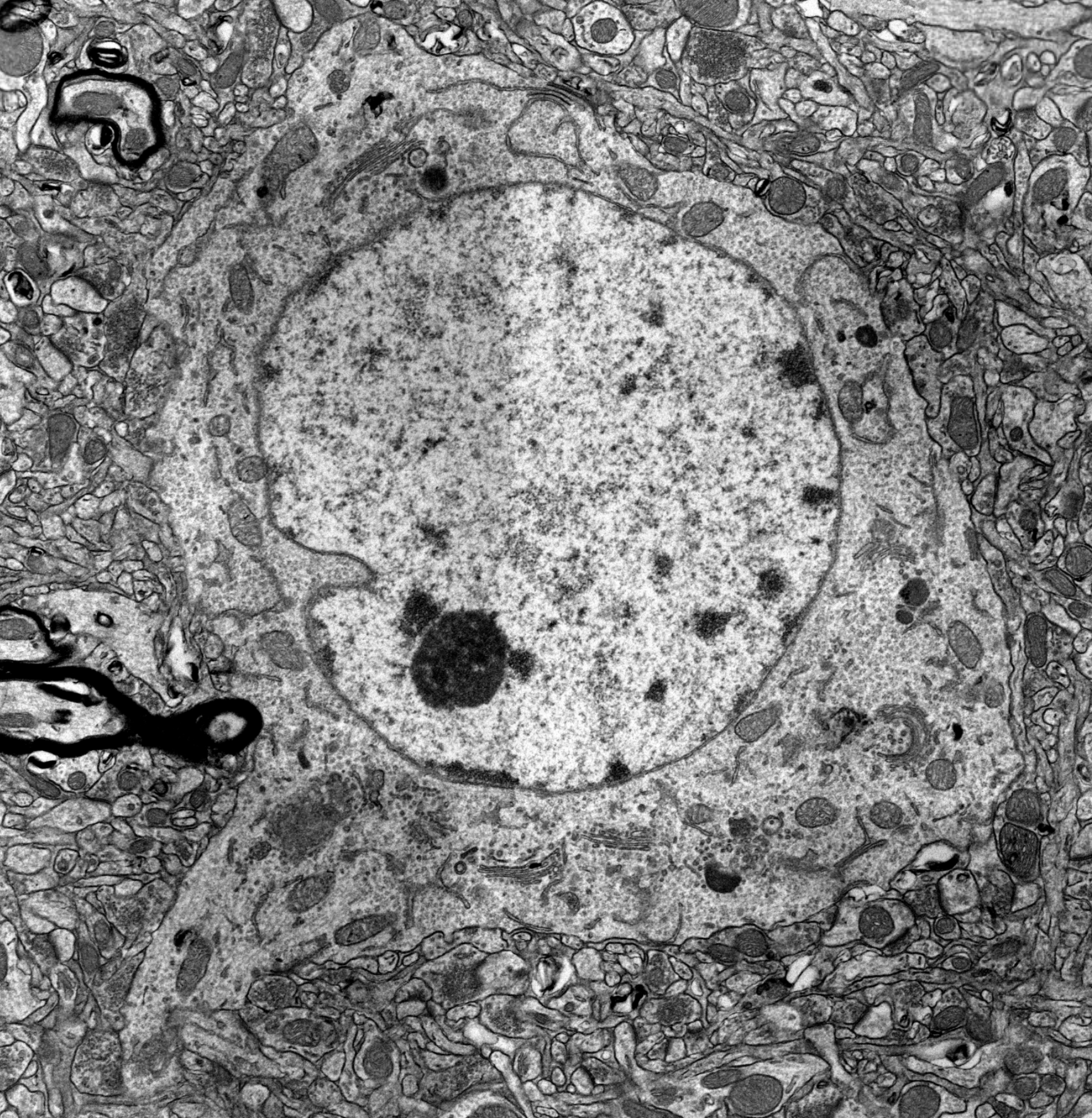
Here’s DNA in the nucleus, trapped inside the gel created by fixation (and also crosslinked itself):
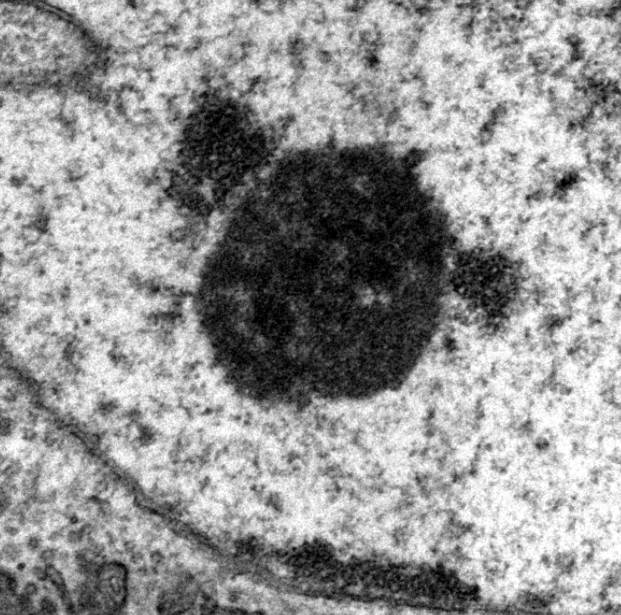
Here’s a Golgi apparatus:
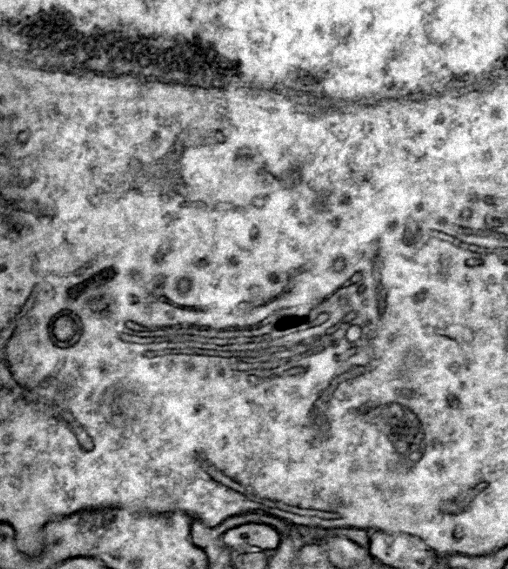
If you look closely, you can see individual ribosomes, locked in the gel along with all the other proteins (they’re the faint grey dots).
Here’s a synapse:
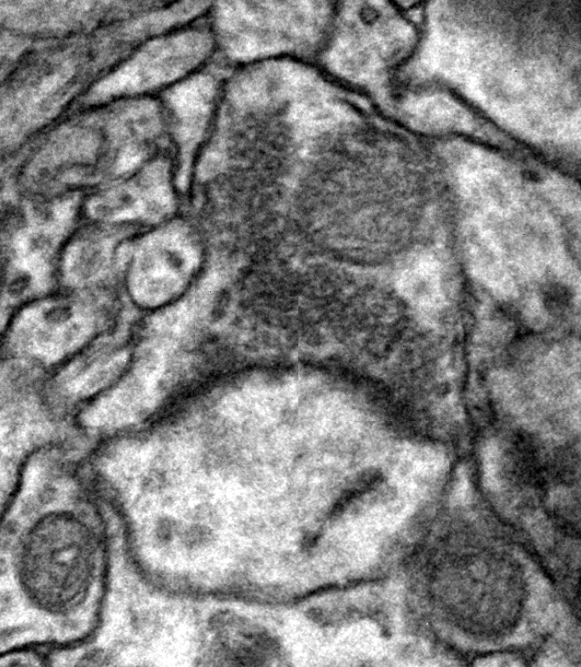
It’s in the same orientation as the model synapse at the start, with the active zone on the bottom and a mitochondria in the upper right. Those individual dark dots in the synapse are each a vesicle (they’re the white spheres in the 3D model), and they each still have neurotransmitter in them. This synapse had probably two million proteins in it before preservation. After preservation, almost all of those two million proteins are likely still there.
I also think <100 yrs is reasonable, based on the rapid progress being made in connectomics (I would bet at 90% that a mouse connectome is made in less than 10 years, for example)
w.r.t. scary futures, this is why we take seriously conditional cremation for our clients! I think this reduces risk to approximately what living people face at the time.
We are working as fast as we can to become certified by the BPF for human preservation and I expect it within the year.