Systems fail when disturbance cannot return as structure.
Summary
I propose reframing “entropy” in complex adaptive systems as uncaptured constraint—degrees of freedom the system has yet to integrate into its policy.
I also propose a candidate persistence primitive: Recursive Closure, the ability of a system to route perturbations back into constraint satisfaction, preventing policy fragmentation under sustained variance.
Intuition / Visualization: Understanding system behavior under repeated perturbation
==============================
Author’s Note
I do not have formal academic training in control theory, multi-agent systems, or complex systems, but I’ve been exploring these ideas from a systems-thinking and information-theoretic perspective. This post is a conceptual and operational sketch: a framework for thinking about how systems “metabolize” perturbations, rather than a finished theory.
I welcome critical feedback, prior-art pointers, or operational metrics, especially if you have experience in multi-agent RL, control theory, or networked systems.
==============================
1. System Definitions
We define the interactive boundary between agent and environment using the following primitives:
Entropy as Uncaptured Constraint: Recursive Closure as a Resilience Primitive
Hook
Systems fail when disturbance cannot return as structure.
Summary
I propose reframing “entropy” in complex adaptive systems as uncaptured constraint—degrees of freedom the system has yet to integrate into its policy.
I also propose a candidate persistence primitive: Recursive Closure, the ability of a system to route perturbations back into constraint satisfaction, preventing policy fragmentation under sustained variance.
Exploration threads:
Metrics & Prior Work: Quantifying fragmentation, curvature, coherence
Operationalization: Measuring
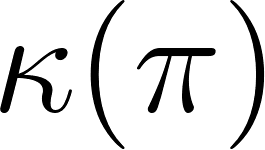
and constraint integration efficiency
Intuition / Visualization: Understanding system behavior under repeated perturbation
==============================
Author’s Note
I do not have formal academic training in control theory, multi-agent systems, or complex systems, but I’ve been exploring these ideas from a systems-thinking and information-theoretic perspective. This post is a conceptual and operational sketch: a framework for thinking about how systems “metabolize” perturbations, rather than a finished theory.
I welcome critical feedback, prior-art pointers, or operational metrics, especially if you have experience in multi-agent RL, control theory, or networked systems.
==============================
1. System Definitions
We define the interactive boundary between agent and environment using the following primitives:
Internal state:
Environment state:
Observations:
Policy:
Constraint (C): energy, resources, coordination limits
Perturbation (P): shocks, noise, distribution shift
Coherence: unity of policy vs fragmented subpolicies
==============================
2. Entropy as Uncaptured Constraint
Shannon entropy measures uncertainty; operationally, this represents degrees of freedom not yet captured by the policy
.
Exploratory Directions:
Metric Focus: Quantify uncaptured constraint via mutual information.
Intuition: Unmodeled degrees of freedom are “hidden levers” the system hasn’t yet learned to stabilize.
Diagram: Flow from Environment Variety to Constraint Integration
Environment Variety > Policy Variety
|
v
Uncaptured Constraint
|
v
↑ Constraint Integration Needed ↑
==============================
3. Collapse as a Failure of Closure
KL divergence quantifies the mismatch between internal model (

Exploratory Directions:
Metric Focus: Track KL accumulation to predict fragmentation thresholds.
Intuition: Systems unable to route perturbations behave like networks with broken feedback loops.
Diagram: Collapse Flow
Plaintext
Perturbation (P)
|
v
Divergence Accumulates D_KL(P||Q)
|
v
Policy Fragments → Subagents Optimize Conflicting Objectives
==============================
4. Recursive Closure
Definition: A system exhibits Recursive Closure if perturbations increase expected future constraint satisfaction:
Exploratory Directions:
Metric Focus: Can
Intuition: The system “metabolizes” disturbances; each perturbation strengthens global control.
Feedforward Loop Diagram
Perturbation (P)
|
v
+-------------------+
| Constraint Capture |
+-------------------+
|
v
+-------------------+
| Coherence Gain |
| (κ(π) ↑) |
+-------------------+
|
v
+-------------------+
| Policy Update |
+-------------------+
|
└---- Feedback to Constraint Capture
==============================
5. Relation to Free Energy Principle (FEP)
FEP explains prediction error minimization; Recursive Closure explains the structural coherence of that convergence.
Diagram: FEP & Closure Outcome
Prediction Error → FEP Minimization
|
v
Convergence Outcome?
├── Coherent Attractor (Closure) ✅
└── Fragmented Subpolicies (Collapse) ❌
==============================
6. Candidate Formalizations & Experiments
Lyapunov-style Boundedness: (policy updates improve convergence after perturbation)
Information-theoretic Constraint Capture: (increase mutual information between perturbation and policy)
Closure Efficiency: (ratio of constraint integration rate to generation rate)
Integrated Flow:
Perturbation → Constraint Signal → Policy Update
| |
v v
ΔI(P; π) ↑ dV/dt ↓
| |
└-----------> Coherence ↑ <-----┘
==============================
7. Overall Integration Map
+-------------------+
| Perturbation |
+-------------------+
|
v
+-------------------+
| Constraint Capture | ← System A integrates → κ(π) ↑
+-------------------+
|
v
+-------------------+
| Coherence Gain |
+-------------------+
|
v
+-------------------+
| Policy Update |
+-------------------+
Feedforward Loop ↑
|
+-------------------+
| Stress Bifurcation|
+-------------------+
High κ(π) → Closure ✅ Low κ(π) → Fragmentation ❌
==============================
8. Request for Prior Art / Critique
Looking for:
Metrics of attractor fragmentation or policy-space curvature.
Operationalizations of

in multi-agent RL or control theory.
If you know papers or frameworks that touch on these topics, even brief references are deeply appreciated!