Who Got Breasts First and How We Got Them
It really is Sydney Sweeney’s world, and we’re all just living in it.
Human female breasts are an evolutionary mystery along several dimensions. First, breast permanence is unique to humans. All other mammals develop breast prominence during pregnancy or nursing, and the mammary tissue recedes after weaning. This process is called “involution”. In contrast, humans develop breast tissue at puberty before first pregnancies and maintain it permanently after last pregnancies.
Second, breasts are costly, both metabolically and potentially from a fitness perspective. Metabolically, because they are fat deposits requiring calories and fitness-wise, because the tissue easily lends itself to malignancy. Breast cancer is apparently rare in captive apes and is overwhelmingly a human disease, often striking women young enough to have children, and so subject to evolutionary selection.
Background
In Descent of Man, Darwin catalogs human secondary sexual characteristics, but he doesn’t seem to have noted human breast permanence as an issue of interest. Cant, 1981 seems to have been the first to speculate about this systematically and believed breast prominence and permanence might have evolved as a nutritional signal of health to mates indicating potential for maternal investment, a la Robert Trivers. Since then, quite a range of hypotheses have developed, and not surprisingly, none of them have any strong evidentiary basis. Pawłowski and Zelazniewicz, 2021, is a review of many of them, and they argue that breasts were a side effect of evolution in fat storage pathways; they even go out on a limb and suggest the trait originated in Homo Ergaster.
The truth is, we know practically nothing about the timing or evolution of breast permanence in humans. Here’s what we do know.
We know our chimpanzee relatives don’t have breast permanence, and our ancestors split from theirs 6-7M ya.
We know that Neanderthals’ ancestors split from ours 500-700K ya. Despite the arguments in the review paper above, we have no idea about breast permanence in any extinct archaic hominins. There are no boobs in the fossil record.
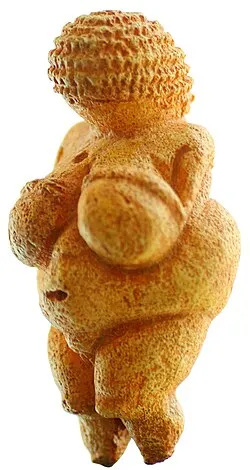
We know various Upper Paleolithic figurines like the Venus of Willendorf, originating around 30K ya show breast prominence, though it’s possible that depicts a lactating woman or is otherwise exaggerated as artistic liberty.
We know Sydney Sweeney is a famous person today.
The visual aids in chronological order.
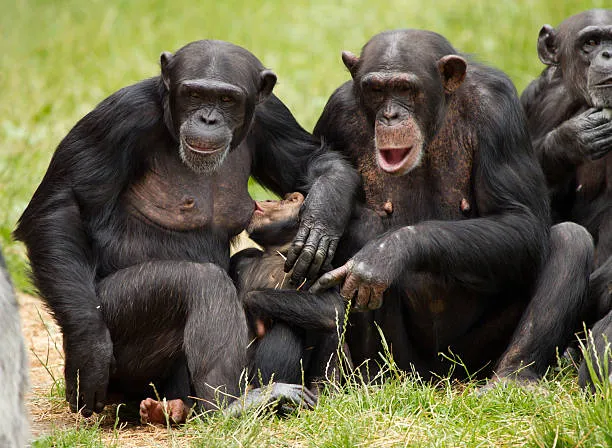
Fig 1. Chimpanzee lactation

This post will outline the various hypotheses that have accumulated about this subject and discover that each has a different set of predictions regarding breast evolution. David Reich just went on Dwarkesh for a second time, and it seems like a golden age of using ancient DNA to study human evolution. Casten et al. recently used such data to take a look at the deep time evolution of language, which, like breasts, is another uniquely human trait. The archaic Neanderthal genomes provide a useful comparison point within the hominin lineage: not a bridge from chimps to us, but a sister branch that lets us ask which traits evolved before versus after the Human/Neanderthal split. This potentially enables the study of human traits that evolved in deep time.
We will be doing a comparative genomic study combining ancestral ape genomes, archaic Neanderthal genomes, and modern European genomes to try to evaluate when and how breast permanence evolved in humans. As Pawłowski and Zelazniewicz argue, is it a trait hominins have in common, or is it specific to humans? We’re going to gather the data and try to answer this question.
Hypotheses
The classical hypotheses for human breast permanence broadly fall into four buckets, though they’re not mutually exclusive. Before delineating these, it’s important to note that what we’ve called “breast permanence” is really two separate traits probably mediated by separate biological pathways.
Pubescent development. They develop early before pregnancies.
Arrested involution. After weaning, the breast tissue doesn’t flatten or remodel back to a previous state. In humans, it looks like this is actually incomplete, not absent. Everyone knows breasts aren’t the same after breastfeeding, but there’s obviously still permanence.
Sexual Selection
Not a lot of surprise here, apart from the fact that sexual ornamentation is rare in females across all of biology. Men like breasts. OnlyFans has a $3 billion market cap. Nevertheless, this is a serious hypothesis that requires careful specification. This is Marlowe, 1998. This is Dick Alexander in 1987. I did some googling and apparently captive male chimpanzees show little interest in human female breasts. This makes some sense because they’re chimpanzees. In this framing, permanent breasts (potentially large ones) are either a sexual signal of some kind, a Fisherian runaway from male mate choice, or both. Whatever it is, they’re uniquely human and developed after we split from archaic hominins.
Nursing or Thermoregulation
In this story, permanent breasts evolved because of direct biophysical advantages in care for offspring in upright hominins. This is Kuvaja et al. 2025. Caro, 1987 leans that way too and cites the idea that hominin infants could nurse easily on the hip with pendulous breasts. Personally, it’s lacking for several reasons including the fact that it doesn’t explain pubescent breast development at all. Regardless, in this framing, permanent breasts are shared by all hominins, including extinct archaics like Neanderthals.
“Camel Hump” and fat reserves
This hypothesis frames the permanent breast as a fat reserve useful for hominids during and after weaning. This is what Cant originally thought. Same with Caro and Sellen, 1990. This hypothesis has a more constrained prediction than the last two. It predicts permanent breasts are shared by hominins just like the nursing hypotheses, but only in the involution pathway. It doesn’t have anything to say about pubescent development.
Byproduct or Spandrel.
This is a Gouldian type of theory and permanent breasts are a side effect of selection on female subcutaneous fat and pubertal endocrine shifts, not a direct modification of mammary biology. This is the only hypothesis that says the breast itself isn’t the adaptation at all. This has yet a different set of predictions: the biological involution program is conserved across chimps, archaics, and humans, but the pubescent development of female fat storage might differ and be implicated.
As you can see, the timing of and biological pathways involved in the development of permanent breasts are key to understanding its proximate evolutionary cause. If it’s uniquely human, it may lean toward a sexually selected trait. If the involution pathway is implicated, it might be biophysical.
Study Design
This is a gene-panel divergence-enrichment design. We know chimps don’t have permanent breasts, and we know humans do. We’re not so sure about Neanderthals. We also know that mammary-related biological pathways are pretty well-conserved across mammals. That’s why they’re called mammals. We’ll assemble a panel of genes we know or suspect are involved in mammary-pathways and look at 3-way patterns of genetic change in these genes: Ancestral/Chimps to Neanderthal, Neanderthal to Human, and Ancestral/Chimps to Human. Whatever pattern is more prevalent could provide evidence of both the timing and circumstances of permanent breast evolution. The allele notation is as follows:
A is the ancestral allele, reconstructed from the Ensembl EPO 6-primate alignment: chimp, gorilla, macaque, and others.
N is the Neanderthal allele, Vindija/Altai high-coverage genomes.
M is the modern European human allele, 1000 Genomes EUR major-corrected from the GRCh37 reference genome.
Given this notation, the different allele change scenarios admit four different mutational categories as follows.
Fig 4. Different mutation patterns across 3 genomes
There are several important statistics here we calculate. First will be the enrichment of mutational category 1 versus mutational category 2 across the gene panels we assemble compared to a set of control genes. If category 1 is more frequent relative to category 2: #cat1 / (#cat1 + #cat 2) in a mammary gene panel compared to the controls, we can conclude there’s plausible recent evolution in these pathways, permanent breasts are a modern trait, and Neanderthals lacked them. In simple language, this rate ratio statistic quantifies the question “of the mutational changes that did happen on the hominin lineage, what fraction occurred after the Human/Neanderthal split 600K ya versus pre-split?”
Second will be the overall frequency of category 2 among all the positions under study: #cat2 / # total positions under study x 1000 bases. In simple language, this density statistic quantifies “how many shared pre-Human/Neanderthal split mutational changes accumulated per kb at this gene?” Unlike the rate ratio statistic, this statistic doesn’t know anything about what happens after the Human/Neanderthal split and can provide evidence of deep time hominin evolution.
Assembling the Genetic Panel
OK, so the above statistics need to be calculated over a collection of genes, so how do we know which genes we actually need to look at to pull this type of analysis off?
Remember what we’re calling human “breast permanence” is really a few different things that probably involve independent biological pathways that we need to test separately to get clean answers. Each subpanel we define below will have a different set of matched control genes we can compare against to calculate the mutational statistics described above.
Subpanel 1: Arrested involution
After weaning, human breast tissue doesn’t flatten or remodel back to a previous state as in other mammals. The breasts are already there, and they certainly change after breastfeeding but they don’t permanently shrink. Before mounting this project, I was skeptical it could work at all because I had no idea that there’s actually a lot known about the involution process, especially in mice. There’s a group of researchers who’ve done gene knockout experiments in mice to study involution genetics. The knockout phenotype is easily observable, doesn’t actually kill the animals, and has applications in breast cancer research, which are all reasons for why this is so well-studied. There are 18 individual genes I found in a literature review confirmed to be causally involved with the involution program in mice, and given the program’s evolutionary conservation, the mice results are probably applicable in hominins as well. These genes form the gold-standard backbone of our first subpanel.
The second part of the subpanel is larger and correlational, not causal. An older study Stein et al., 2003 uses microarrays to evaluate transcriptomic expression in mouse mammary tissue across the mouse lifecycle. In doing so, they quantify gene expression levels during involution relative to background expression to discern which genes are likely implicated in the involution program. I took their data, cleaned it up and aggregated it a bit, and used the differential involution expression to add to the involution subpanel. This ends up with 111 involution genes total.
Subpanel 2: Pubescent adipose tissue
The careful observer will have noted that breasts are largely made of fat. This is adipose tissue. Unique in humans, adipose breast tissue forms during puberty and before pregnancy. It may be the case that permanent breasts have nothing to do with involution, and the involution program is basically superseded by evolutionary changes to the adipose pathways in human females instead.
There are knockout experiments in mice in this pathway as well, but unlike in the involution knockouts, the observation is in mouse developmental stages. There are 9 individual genes associated with knockout experiments in mice and this panel is augmented with genes discovered as significant in GWAS studies and clinical results totaling 89 genes in this subpanel.
Unlike the involutional subpanel that could capture changes in breast evolution after pregnancies, these genes are meant to track change in fat-storage evolution before pregnancies, the other half of the permanent breast mystery. In addition, there’s a suite of genes in this subpanel implicated in breast development and female fat disposition specifically.
Results
The code and pipeline that produce this analysis is checked in here if you’re interested in that level of detail. The adipose subpanel above was null in every single test; in this dataset, there’s no evidence of any unexpected evolutionary changes among these genes Ancestral/Chimps to Neanderthal, Neanderthal to Human, or Ancestral/Chimps to Human compared to reasonably selected controls.
In the involution subpanel, the rate ratio #cat1 / (#cat1 + #cat2) tests were also null, and there’s no evidence there was recent, post-Neanderthal split evolution in the breast involution program.
Fig 5. Null rate ratio results.
The positive and qualified result was in the cat2 density test in the involution panel, the third test below.
Rate-ratio test (paired, full panel):
Involution: n=108 matched pairs
Median target : 0.163752
Median ctrl-of-target : 0.170843
Median paired diff : −0.007752
Wilcoxon p=0.844111, sign-flip perm p=0.821300
Cat1 density (modern-human-specific) — paired, per 1000 callable sites:
Involution: n=108 matched pairs
Median target : 0.994843
Median ctrl-of-target : 0.971924
Median paired diff : 0.017327
Wilcoxon p=0.501223, sign-flip perm p=0.339800
Cat2 density (hominin-shared) — paired, per 1000 callable sites:
Involution: n=108 matched pairs
Median target : 5.018967
Median ctrl-of-target : 4.585107
Median paired diff : 0.308488
Wilcoxon p=0.004467, sign-flip perm p=0.024400
Cat3 density (Neanderthal-specific) — sanity check — paired, per 1000 callable sites:
Involution: n=108 matched pairs
Median target : 0.509372
Median ctrl-of-target : 0.481529
Median paired diff : 0.050176
Wilcoxon p=0.017881, sign-flip perm p=0.037000
Cat1/Cat3 ratio test (paired, branch asymmetry):
Involution: n=108 matched pairs
Median target : 0.649001
Median ctrl-of-target : 0.656984
Median paired diff : −0.019165
Wilcoxon p=0.957451, sign-flip perm p=0.932700
These are the situations where ancestral alleles disagree with Neanderthal and Modern human alleles, which do agree. The genetic changes in the involution pathway occurred before the Human/Neanderthal split.
This positive result was robust to changes in the control selection procedure and whether the controls are pooled together or not at comparison time. I also ensured it survives Bonferroni correction and I got paranoid that Neanderthal introgression had inflated this statistic; due to the incredible work done by David Reich and Nick Patterson we now know that all modern humans outside of Subsaharan Africa have inherited some Neanderthal genetic patrimony. Although the percent is typically pretty small, I replaced the modern European reference with an African reference and basically the same result (Wilcoxon p=0.0048) is retained.
When you look at the gene-level disaggregations and gene dropout tests, it doesn’t appear to be a small set of genes carrying the effect’s payload on the whole involution subpanel, which is consistent with polygenic evolution. See the figure below.
Fig 6. Category 2 substitutions
Since the cat2 density tests tracks accumulated mutation on the pre-split leg of the study, this along with the negative rate ratio tests suggests changes in the primate breast involution program predate the Neanderthal split, and are not specific to modern humans.
What about cat3 density enrichment? That’s the Neanderthal specific (A = M and N !=A and N != M) sanity test. This came in less significantly than cat2 and with a much smaller effect size (Wilcoxon p=0.0179). It doesn’t survive Bonferroni or changes in the control selection strategies. I’m pretty sure it’s artifactual or much weaker than the cat2 result, suggesting the latter result isn’t because the selected gene subpanel is inherently mutation-prone.
I did some ad-hoc dN/dS testing on the cat2 involution result and found the density signal is concentrated outside of coding regions, which I think is consistent with a conserved genetic program that’s undergone evolution in gene regulation.
In short, I think the cat2 density enrichment is real and has real bearing on the question of when permanent human breasts evolved.
Discussion
Compressing the various hypotheses around permanent breast evolution into a single table, we get Figure 7.
Overall, the cat2 density and older permanent breast timeline looks bad for the various flavors of modern-human sexual selection hypotheses favored by Richard Alexander in work 40 years ago. In addition, I’d remark it also looks bad for evolutionary psychology more broadly, imputing modern breast obsession backward onto contrived human-specific just-so stories.
Fortunately, it doesn’t look great for Stephen J. Gould either. Spandrels are an overrated idea and the adipose panel here was null. To be fair, I think there might have been problems in specificity with the adipose panel here that were my fault, but there was no usable signal in this dataset.
The “camel hump”/fat reserve hypotheses specific to females end up looking the best in the light of this study. Caro and Sellen’s 1990 “The Reproductive Advantages of Fat in Women” probably comes out the predictive hero here. They basically argue that fat reserves in hominin women have compounding, self-reinforcing fitness advantages through the entire female lifecycle and breast permanence is part of that integrated program.
What’s interesting about this is that we can speculate that the pubescent adipose tissue development that characterizes modern human breasts predates the involution changes. Obviously, it’s not definitive, but it’s difficult to imagine an evolutionarily-arrested involution process on breasts that didn’t even develop permanently in the first place. If the involution changes occurred in deep hominin time, the permanent breast development during puberty probably did as well.
All of the statistics and results reported above are at the subpanel level involving dozens of genes. All candidate gene studies are false, but some interesting speculative clues lie at the gene level.
MMP3 is a gene encoding an enzyme the action of which sits causally upstream of a collection of other genes starting with MMP governing connective tissue remodeling. It came to be in our involution panel on account of a mouse knockout experiment done by Alexander et al., 2001. This gene’s cat1 density is lower than that of all but one of its matched controls, which means it’s highly conserved in modern humans; this supports the idea that if this gene has significant involvement in the evolution of permanent breasts, its involvement is old, like the aggregated cat2 tests suggests. It’s suspicious because it influences the entire MMP suite, and therefore is a candidate for most easily producing a drastic phenotypic change like arrested involution and permanent post-weaning breasts.
Coda
The arrested involution of human breasts probably predates the Human/Neanderthal split and is not a derived, more modern trait. As for why this trait evolved, I think some causes look more promising than others, but there’s just no way we can know from this type of study.
Genomic analyses like this done to study deep-time evolution of human traits are probably going to become more common, though I think Serious Scientists who publish in Real Journals might ignore studying breast evolution for fear of it being viewed as frivolous by their peers. This is why I decided to get the ball rolling. This deserves a much more professional examination that will hopefully find something I missed and fill in the holes here.
Average breast size differs a lot between European and Asian women. Within each population there’s also some spread.
If I wanted to understand the evolution of human breasts I would look more on how they differ in humans, what kind of genes are responsible for that and how the selection might work to get the differences between human populations.
Is it coincidence that Europeans are more adept to drinking cow milk and have larger breasts then Asian women?
Mongolians have almost the lowest tolerance for milk among human populations, and the absolute highest rate of dairy in the diet. They developed cooking techniques that overcome the intolerance to achieve this feat.
Another confounder in this area is much more modern: most claimed incidences of “lactose intolerance” are actually intolerance of protein changes from the machine homogenization process and flash pasteurizing process
The key research was on people who can drink goat milk which has higher lactose levels than cow, and people who can drink raw milk.
Not saying the consumption of milk in Europe is a coincidence, just saying seek larger amounts of evidence than you might initially expect to need. This area has a lot of noise hiding the signal.
I think a lot of the European/(East?) Asian difference you’re referring to is because of polymorphism in the EDAR gene.
I assigned low probability to Sydney Sweeney’s décolletage appearing on LessWrong. I now stand corrected, and mildly pleased.
It’s the OnlyFansification of everything.
On the sexual selection hypothesis: Before breast permanence, wouldn’t having breasts have been a sign that, while fertile in general, a woman was not currently likely to become pregnant or want to mate? In the world of just-so stories I could theoretically be convinced that our pre-permanence ancestors would have seen having breasts as a turn-off.
I think Sarah Hrdy is the person who’s most carefully examined this line of reasoning.
A hypothesis imho important but you leave out entirely: permanent breasts as part of a broader signaling complex co-evolved with the other unusual human female trait: cycle-independent sexual receptivity. Humans aren’t unique in extended sexuality (bonobos and some Old World primates have it too), but we’re at the extreme end, and we’re also the species with permanent breasts. The natural a priori thus, imho: selection for cycle-independent male sexual interest favors traits signaling “potentially receptive” outside the fertile window, and permanent breast tissue feels like a strong candidate.
While AnthonyC’s comment would seem to object it indirectly, as pre-permanence breasts would have signaled ‘currently lactating, not fertile’ and thus been a turn-off, this seems to miss: In ancestral high-fertility conditions, most adult women would have been pregnant or lactating most of the time, and you got pregnant while lactating, not only later! Even today, e.g. my mum had 4 children in 4 years. If an ancestral female is lactating for 6 months to 2 years, having big breasts can be mostly a good signal for fertility not the other way round.
I don’t think your timing result is incompatible with this story; it just locates the co-evolution in deep hominin time. ((Actually, if your approach could be extended to genes regulating the cycle and sexual receptivity that could be interesting))
Do we know anything about when humans or Neanderthals started having sex in missionary (or other) positions rather than just the “doggy style” position that other animals (presumably including apes?) have sex in? Could the missionary sex have contributed to the evolutionary pressure for breast permanence? Or could the breast permanence have contributed to the origin of missionary-position sex?
Regarding weening, lactose-tolerance, and breast permanence: I suspect this is a red herring because A) the animal milk humans drink even after they’ve stopped drinking their mothers’ milk is equally available regardless of human breast size, B) there’s no lactose-tolerance issue for mothers concerning their own milk, and C) the presence of breasts doesn’t indicate the availability of milk in any case.
(Also: who the devil is Sydney Sweeney and since when was Dolly Parton deprecated as the ISO-approved figurehead for mammalogical research? This is nearly as disorienting as when Pluto stopped being a planet.)
I lol’d here, but maybe there’s a serious point?
You mention upright stance as part of the nursing or thermo hypothesis. Why wouldn’t the uniqueness to humans be largely a part of the upright stance? They don’t feature nearly as prominently in a tree-dense environment or if you’re hunched down on all fours most of the time, right? For a sexually-selected trait, they need to be displayed. Sexual selection also seems to correspond strongly with the onset of fertility.