How does this square with the increasing slop-ification of the internet, where 99% percent of what everyone sees is low-quality AI-generated content and anything worthwhile will just be drowned in the sea of noise and never have a chance to be read by anyone, much less become influential?
jchan
Karma: 1,011
Hot take: How about not coming up with a name at all? Or rather, keeping the existing name of whatever location you end up getting. (If Lighthaven had done this, it would’ve called itself “The Rosegarden Center” or something like that.)
This is meant to convey that you’re serious about getting stuff done and not just fantasizing about what you might do later before you’ve even done anything yet. It suggests confidence that your reputation will speak for itself under any name. (E.g. everyone knows about the “Chatham House Rule”, but the building had already been called “Chatham House” long before the organization that came up with that rule moved in.)
The group was pretty small so it was often decided by consensus, but otherwise it’d come down to a vote (the topic+leader that interests the most people would go next). Sometimes a survey would be sent out, but usually (for convenience) it would be decided at the meeting. Another consideration (as I mention) was that whoever ran a topic least recently should get priority over someone who did so more recently, but this wasn’t a hard-and-fast rule.
Newcomers would often be specifically encouraged to run their 2nd or 3rd meeting, since that way they can see themselves as an active contributor from the very beginning, and the rest of the group can get some new perspectives. (The onboarding process takes all of 30 seconds—“Here’s the mailing list; look at one of the previous emails and copy that template. Try to send your email ASAP so that people have time to do the readings.”)
If a large organization operates as a social group, then it’s probably doing that by having small local “chapters” of <150 members, each of which would be a “guild” by my definition. The overall organization itself might be thought of as a 2nd-order organization, a “guild of guilds”. (Another possible 2nd-order form is the “clique of guilds”, where there is no umbrella org and each chapter decides for itself which other groups to associate with. However, I’m not sure if the full 3x3 grid of combinations all make sense.)
On the other hand there are large groups with bylaws and elections that don’t really function “socially” at all; in particular, they count anyone as a “member” who pays the requisite fee, even if they’ve had no personal interactions with other members at all. Here, it’s more like you’re a customer paying a company for a service (even if that service is charitable); and since such groups aren’t really “communities”, most of what I’ve said here doesn’t apply.
I suppose it comes down to: How much value is riding on the unity of the group, or fails to manifest because of (anticipated) disunity? Real estate would be a clear example, albeit far-fetched—rationalists have enough disposable income that buying a building isn’t entirely infeasible, provided that the social infrastructure is there, but even in the best of times it might still not be worth it, so it wouldn’t make sense to orient around that specifically.
But what about intangible value? It’s harder to pin down, but a group might have such things as:
Brand recognition—A group which has operated under the same identity for a long time becomes familiar in the broader society even among people who have no personal connection to it.
This ensures a steady influx of newcomers (and returners who’ve been checked-out for a while).
Serendipity—Up to Dunbar’s Number, the number of serendipitous connections scales quadratically, and so a schism causes some such opportunities to be lost. (A “porous schism” can mitigate some of the loss, but not all, by definition.)
Efficiency—There is no need to duplicate work if the group remains united.
Institutional knowledge—People may develop complementary skillsets in relation to some project the group does, and there won’t be enough redundancy to keep doing it after ~half of the people suddenly are gone.
Esprit-de-corps—Continuity of identity enables a stronger setting of implicit norms.
This is admittedly rather vague and vibes-based, but it feels like one of those cases where a gut feeling can only be explicated with advanced study. See e.g. The Strategy of Conflict ch. 4 p. 92 (“the tradition that goes with the legal identity of the group is an asset worth preserving for a future buildup”).
Then there’s the positive externality of a society with lots of guilds being generally nicer to live in, as I’ve argued previously, but this is more speculative (and it’s ultimately not “our” job to shoulder that whole burden!).
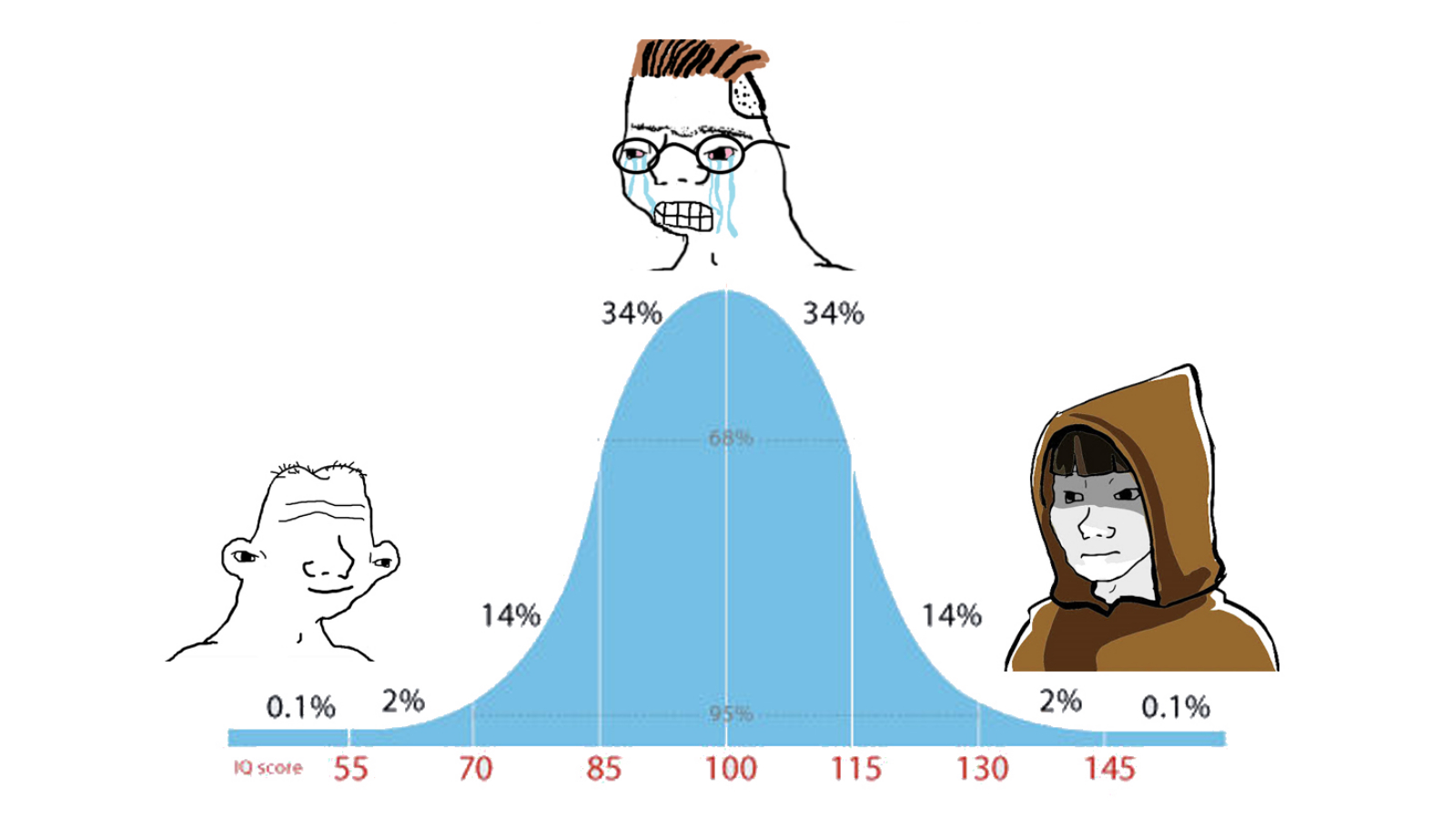
You say
We’ve even established that bans are per-person-running-the-meetup; this does mean we’re going to have some obnoxious people show up for longer than would be ideal as different meetup runners ban them one by one, but in the other direction I don’t feel like this function is resting solely on me anymore.
Whereas I say
a community cannot (long) exist unless this specific thing is being taken care of in a coherent way on behalf of the entire group.
(That is: There can be no disagreement about who is banned. Either someone is banned by the whole group, or they are welcomed by the whole group.)
My model is clearly quite different from yours on this point. Each group must decide for itself, of course, but if I were in your position I would be warning everyone that piecemeal banning is unstable and will inevitably lead to either a dramatic schism or the quiet dissolution of the group, probably a lot sooner than anyone thinks.
The issue isn’t the inconvenience of an obviously-obnoxious person getting banned gradually. The problem is when you get polarizing “scissor people” who are persistently banned by some organizers but not all; and/or when organizers each ban each other from their respective events. This may seem unlikely, but I do believe it’ll eventually happen, and when it does it’ll consume a vastly disproportionate amount of the community’s attention to the detriment of its actual mission.
(See e.g. the whole Said/Duncan affair—and this was for something as low-stakes as posting on LessWrong. Now imagine this in an IRL community that lots of people are deeply invested in, and where there is no top-level authority to make a final decision.) [Preemptive apology: I have no personal connection to these people and their names are just words-on-the-screen to me. I don’t mean to rehash the object-level dispute; it’s just an example.]
In my view, the persistence of polarizing/reciprocal bans is clearly in tension with the kind of “community” or “society” I’ve been advocating for in this sequence. Something will have to give. Either
the community as a whole decides who’s right and who’s wrong, and the situation resolves to either a total ban or a total not-ban;
the community hard-schisms into two or more separate groups, forcing a large number of people into conflict with each other even though they never wanted to take sides; or
the community dissolves into a undefined mass of small cliques which now become the focus of all the interesting stuff, while the “public life” of the community withers away even if it still exists on paper.
Realistically, #3 is the most likely outcome, and for many people it will seem perfectly fine, because they don’t know what “living in a society” actually looks like. But something of great value will have been lost, even if they don’t realize it.
I do agree with Brendan that your case sounds like you’ve distributed the organizer role, not removed it. This is the strategy both Melting Gold and Overthrow The Organizer Day are pointing at.
In the extreme, “nobody is an organizer” and “everybody is an organizer” are just different descriptions of the same state of affairs.
But the scenarios described in “Melting Gold” and “Overthrow the Organizer Day” differ from the “constant rotation” approach by their lateness and exceptionality respectively. In “Melting Gold”, the organizer toils in solitude for quite some time before trying to find a replacement, but by then it’s too late because they’ve constructed a role shaped exactly like themself, and training someone else to fill that exact same role takes 20 hours of work. In “Overthrow the Organizer Day” it’s less urgent, but things go back to “normal” (i.e. the one organizer doing everything) once the “Day” is over, and the others are only there as backups for later.
It sounds like you’ve advanced much further beyond that in the last six months (which is great). At the point where a group has 14 “organizers” I would find the term rather meaningless, since becoming the 15th doesn’t have quite the ontological gravity as becoming the 2nd. But maybe that’s just personal preference. Here’s a concrete test: If someone is new to the group (i.e. they’ve been to only one or two meetups), is there a frictionless path for them to organize the very next meetup? Or by the time they realize this was an option, will they already have carved out a niche in the group as a “passive consumer”?
The person running the meetup doesn’t need to show up consistently, since all they’re committing to is to attend that one meetup, and they’ll do so enthusiastically since they’re specifically setting the agenda to be something they’re interested in. It’s not a thing you have to do, but a thing you get to do.
In the group I was in, we would often specifically encourage newcomers to volunteer right off the bat, so their 2nd or 3rd meetup would be something led by them. Whether they’d keep attending regularly after that was a crapshoot, but by then the job was done.
I’m not sure if this ever came up, but the real test of who the organizer(s) are is what happens when one of the rotating leaders drops the ball.
(I don’t remember if this happened.)
Having a calling is very important for feeling like you’re fully part of the community. It’s the difference between ‘the church I go to’ and ‘my church’. You feel more ownership of and oneness with a community to which you are meaningfully contributing.
This bit is interesting and very much at odds with the mainstream culture, where people view community at best as a “consumer good” to be passively enjoyed. I am not familiar with Mormonism at all, but I just posted an article on a similar topic (which I had written before reading this post). However, that’s mainly focused on removing the barriers in the way of active participation. But how do we get people positively interested? This is a much harder cultural shift; nobody wants to be the lone stag-hunter being taken advantage of by others.
I run East Coast Rationalist Megameetup and the Rationality Meetups discord, and all three had more energy put into them when I had more energy for Rationalist meetup maching.
The question is, why does it fall upon you, specifically, to put in the energy? If people find value in these things and want them to continue, why aren’t there dozens of people coming out of the woodwork positively insisting on helping make them happen?
I touch upon this in my most recent post, but I’m not sure if that’s a complete answer either. Shaking people out of the default “passive consumer” mindset and creating a culture of active participation is certainly not easy.
The thing is, not all schmoozing is created equal. Some has no value (“Did you hear about the antics of the latest internet microcelebrities?!”) and some has negative value (e.g. zero-sum status-jockeying where everyone feels compelled to say their piece but would prefer the conversation never happen at all). So, the skill people need to learn is how to redirect conversations in more productive directions.
Couldn’t this just be a tag here on lesswrong?
It could be, but for whatever reason it isn’t. I suppose I should heed my own advice and create it? (I only now realized I’m able to do that.) There you go: https://www.lesswrong.com/w/meetup-writeups
But this doesn’t help with local discoverability unless there’s also a specific tag for each individual meetup group, and I’m not sure I’m ready to be the one to open those floodgates myself. Also, writing up notes that are up to the quality standards of LW articles is a lot of work. It’s much easier to write down brief bullet points, but these may be not-very-useful to people who aren’t part of the local community that produced them.
If you assume there’s a primary author of such a writing, isn’t lesswrong’s draft-sharing function already good enough?
Not sure what you mean by this; can you elaborate?
Splitting a guild in half may be difficult because some number of close 1:1 connections are going to be broken no matter where the line is drawn. Instead what may end up happening is that the guild undermines its own unifying principle and shatters into dozens of small cliques, and now there are 0 guilds.
The unfortunate reality (and what motivated me to write this post) is that sometimes an organization will find itself constrained by its past choices, with no viable way forward. A guild of 200 may wish it could’ve been two guilds of 100 instead, but the time to make that decision was when they were contemplating adding their 101st member, not now. (Similarly, a group of 60 may find itself in “embarrassed cult” territory and wish it could become a guild, but really they should’ve done that a long time ago.)
Maybe the ideal setup for a large community would be something like the “colleges within a university” system, where the university has a rule that each college may not grow beyond a certain size. So, as the existing colleges fill up, there will be a growing population of unaffiliated hangers-on who will eventually be able to form their own college.
(Again, I’m only speculating here since I have no personal experience with groups this large.)
The world got ugly when we invented LEDs
I don’t know if it’s just me, but whenever I see lone, undiffused LEDs (such as on string lights or light strips), it is immediately obvious that they’re LEDs because of the “aliasing” or “shimmering” effect I see when my eyes saccade back and forth. This is a stroboscopic effect and so even the best CRI doesn’t prevent this. For this reason (and on the recommendation of this article) I’ve made sure to only get incandescent string lights for my own use.
(Sometimes when I see a Christmas tree strung up with LED lights, I can even tell that half of the bulbs are on a circuit whose cycle is 180 degrees out of phase with the other, because the lights shimmer in opposite directions.)
That’s fair; I’m trying to gesture at a certain cluster of rhetoric I sometimes come across, and I may be caricaturing or strawmanning by calling it “logical positivism”:
Treating “X is a social construct” as the end, not the beginning, of the conversation, as if nothing else meaningful can then be said about X
Or, asserting that social-construct-statements are simply false (example, though not to pick on that article too much; that’s just one I remember from recently)
A sentence like “The Congress of the United States shall consist of a Senate and a House of Representatives” is not “false”, but it’s not “truth-apt” either. It also wouldn’t really make sense to apply the Litany of Tarski: “If the Congress of the United States shall consist of a Senate and a House of Representatives, then I desire to believe that the Congress of the United States shall consist of a Senate and a House of Representatives...”. Maybe I think Congress should consist of one house, or three, or should be abolished, but this is unrelated to any belief about an underlying “reality” that this statement somehow fails to correspond to.
You can cash out “The Congress… does consist of...” into empirical observations, but I think people speaking imprecisely may confuse this with the “shall” version.
To give the analytic tradition its due, the concept of illocutionary acts was later developed to cover statements like this, but it would be hard to fit it into the framework of “classic” logical positivism (i.e. that everything is either an empirical fact, or a tautological relation of ideas, or else meaningless).
I wonder how this generalizes to decisions that aren’t just about electing candidates, but involve a combinatorial explosion of possible courses of action. E.g.: “We can have our conference on either Friday or Saturday. We can invite Professor Alice as a keynote speaker, or Senator Bob, but Senator Bob is only available on Saturday. If it’s Saturday we can invite both, but then we must choose another item to delete from the agenda. Or we could have a session on both Friday and Saturday, but then we must raise the ticket price by $X...”
In a typical Robert’s-Rules meeting the outcome will sometimes depend in a fairly arbitrary way upon the order in which the various alternatives were suggested. Approval voting wouldn’t have that problem, but may become inefficient if combinatorial decisions like this come up a lot.
How about this as a synthesis:
(This is speculative on my part, since I have no personal experience with groups like this.)
A group of type #5 is really no cult at all (since there’s no leader), but a “mob” as you say. I was only calling it a “fractious cult” because the most common way to end up there is a large cult suddenly becoming much more egalitarian upon the loss of their leader. But I suppose it could also result from a guild growing too rapidly and carelessly. In any case, a mob is inherently unstable, and will quickly decay into something else.
In a perfect guild, every member carries around a mental model of every other member, which they consult whenever acting on behalf of the group. This can only work up to a size of 150, since it’s simply not possible to carry around more mental models than that (hence Dunbar’s Number). Therefore it becomes increasingly necessary to delegate broad sweeping authority to “standing committees” (etc.) that are less-than-perfectly accountable to the group, and have to use their own judgement in a lot of cases. Plenary meetings become increasingly rare and performative. In that respect it starts to take on certain culty characteristics, and so it’s an “imperfect guild”. On the other hand it’s not really a cult either; I don’t know where that boundary is. It may overlap with #8 somewhat.
The significance of the “phase boundaries” is that it takes a lot of “energy” to pass through them, and so groups will often break up or stagnate rather than do this. This is why the direction of the slope is meaningful. So e.g. when a growing clique approaches Robert’s Limit from the left, the more egalitarian-leaning members will believe it’s imperative to cross the boundary now (i.e. draw up a guild charter), whereas the more authoritarian-leaning members will think this is unnecessary. Therefore the group will either try to avoid exposing the division by ceasing to grow, or else break up, thus bouncing off the boundary.
Likewise, I imagine that when a growing guild approaches Dunbar’s Limit from the left, the authoritarian members will already be exceeding their mental-modeling-capacity and will thus think it’s necessary to cross the boundary (by appointing a standing committee or whatever), whereas the egalitarian members will insist on stretching their mental-modeling-capacity as far as possible in order to avoid compromising the “perfection” of the guild.
I could see a similar/opposite point that you don’t need structure in small cliques, but with someone ’lightly in charge” you can avoid structure up to 25-30.
Yeah, I think this is what I’m getting at. Robert’s Rules says there’s no real point in formality if the group is about 12 or fewer; this defines the minimum size at which the group will think adopting formal rules is a good idea. More authoritarian groups can postpone that discussion till later.
I’m more confused about the Dunbar number curving, even in fairly authoritarian systems you should still be able to know and maintain personal relationships with other members of the group. There’s also the implication that a Guild could be a reasonable format for 50-100 people if mostly egalitarian, but hits size limits as the leader takes on more authority, which seems the opposite of what I’d expect.
My intuition is: That line represents the point at which people start thinking “This bureaucratic structure is too cumbersome to get anything done with this many people; we therefore need strong leaders who can act through personal authority rather than merely bureaucratically-delegated authority.” I.e., the guild starts turning into a cult. And the population threshold at which people will give up on the guild structure will be lower the more authoritarian the culture.
Example, but only by analogy since it’s not really an “association” in the same sense—Because of their egalitarian culture, towns in New England will maintain an “open town meeting” form of government (which functions like a guild) up to a population of about 6,000 or so, whereas in less egalitarian parts of the country a village will incorporate itself into a town with a mayor (which is sort-of like a cult) at a much lower population threshold.
(Maybe the name is confusing. I’m being a bit cheeky calling the line “Dunbar’s Limit”, since it’s named after its x-intercept, i.e. “Dunbar’s Number”, which is just the number 150. That is, you can have 150 personal acquaintances regardless of whether you’re in a guild or a cult; it’s just that 150 is the point at which even the most staunch egalitarians will give up on trying to keep it a guild.)
I’m less sure about what the clique/cult boundary represents. Maybe that’s more of a gradual transition.
I think analyzing the “Signal” is the key. It’s an output, and so it is not causally upstream of anything else, but it is evidently not necessary to play the game, so it stands in need of an explanation. And its modality (analog waveforms) is clearly unlike anything else in the machine. The narrator would be able to deduce the concept of “music” by noticing that the frequencies relate to each other by factors of 2^(1/12) that often seem to approximate small whole-number ratios like 3:2 and 5:4. From this it can conclude that the intended users of the machine have some sensory modality that directly perceives waves and does some kind of Fourier analysis of their frequencies, and which is likely distinct from the modality by which the “screen” is perceived.
I don’t know where this gets you exactly, since periodic waveforms can have any number of physical explanations, but it seems a lot closer to the physical world than anything else here.
You’re off to San Francisco Bay, hurroo, hurroo
You’re off to San Francisco Bay, hurroo, hurroo
You’re off to San Francisco Bay
Another one lost and swept away
What madness drove you, who can say
Oh [Name] we hardly knew ye
With dung and drugs and drugs and dung, hurroo, hurroo
With dung and drugs and drugs and dung, hurroo, hurroo
Where the streets are paved with drugs and dung
And the zombies bite and the muggers run
So watch your step and pack your gun
Oh [Name] we hardly knew ye
You’re sleepin’ three or four abreast, hurroo, hurroo
You’re sleepin’ three or four abreast, hurroo, hurroo
You’re sleepin’ three or four abreast
1 bedroom/bathroom cuddlefest
Just countin’ down till options vest
Oh [Name] we hardly knew ye
No friends or lovers you may find, hurroo, hurroo
No friends or lovers you may find, hurroo, hurroo
No friends or lovers you may find
But leeches keen for open minds
To feed on for their “sigma grind”
Oh [Name] we hardly knew ye
Where are those eyes so clear and wide, hurroo, hurroo
Where are those eyes so clear and wide, hurroo, hurroo
Where are those eyes so clear and wide
That once would boast with cheerful pride
“We’ll save the world, and more beside”
Oh [Name] we hardly knew ye
Not long before you’re crawlin’ home, hurroo, hurroo
Not long before you’re crawlin’ home, hurroo, hurroo
Not long before you’re crawlin’ home
A weary pile of skin and bone
You’ll sing again but sing alone
“Oh [current location] I hardly knew ye...”