Epistemic Status: I’m confused! Let’s go shopping! (...for new political systems <3)
I want to write an essay about the actually best voting system, but before I do that I want to get clear on what the desiderata should even naturally or properly or wisely be...
Participation?
Sometimes it is illegal to not vote. You could create a two day holiday, and have 24 hour emergency workers do shifts but have some time off to go in and be fingerprinted and register their preferences and so on. There could be free money at the polling station for voting, and voting assistants hunting down the people who haven’t voted yet.
If you have this system, then “refusing to vote” can never happen.
But also, certain voting systems fail the Participation criteria such that some people might wish, in retrospect, to have turned in a ballot that says NULL (and makes it possible for the election to fail quorum?) rather than turning in a ballot.
On the other hand, if a polity uses a system that FAILS the Participation criteria AND ALSO it forces everyone to vote, then maybe it would be unethical to have forced people though the puppet show of pretending to be able to express their civic preferences without them actually being able to express their civic preferences?
On the gripping hand, maybe if you’re trying to boot up a new polity from scratch (as was attempted in Iraq, after George W Bush invaded that country in 2003) maybe you really really really want to incentivize people to vote for a bit just to “get the thing started”? Maybe Participation is super important for building and merging rather than shrinking and splitting? Maybe Metcalfe’s Law is relevant to polities? Is bigger always better?
Forking?
Sometimes a country’s citizenship is very valuable (like the US has a citizenship like this, but it isn’t the most valued-in-practice citizenship from the “cost to become citizen” estimates I can find) and other country’s citizenship is net negative, with people trying to escape. Sometimes a lot of people want to escape all at the same time. Also, maybe certain election results will cause some large faction of citizens to want to exert their right to revolution, and break away? (Or maybe there is no moral right to revolution? Or maybe whether there is a right to revolution is culture dependent?) And so maybe it is a positive feature of an election if “None Of The Above For A Single Polity / Break The Polity In Two With These TWO Leaders” is a possible outcome? Or not? How would we know?
According to The CAP Theorem, if you refuse to allow Forking then you MUST choose between Availability and Consistency in your system design… but when is Forking really bad and when is Forking actually maybe kinda good?
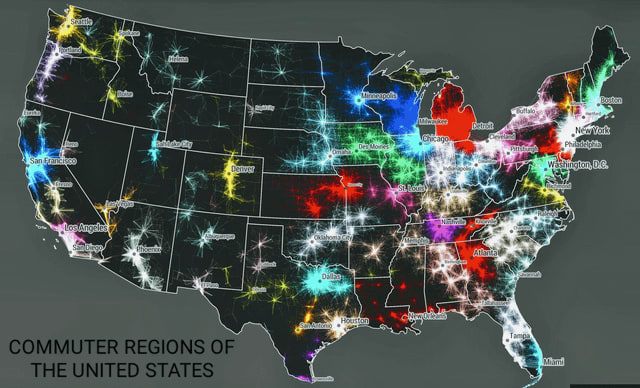
Something I notice: there is very very little attention paid to the “polity merge operation” where two polities might be separate, and both hold elections, and then end up merged at the end, and it somehow goes very smoothly and nicely, because they were, in some sense, already “running the same civic operating system” and that civic operating system is able to fork and merge by design. Maybe if all the US states were running civic operating systems that support this behavior somehow, then maybe the state boundaries wouldn’t be fucked beyond belief and very very very far from the naturally good places for them to be?
Objective Evil?
Maybe there are systematic insanities latent in human nature, and the median leader preferred by almost everyone in head-to-head pairwise comparisons would turn out to be someone who is “objectively” very evil, and wants to do something like commit genocide on 15% of the population (or whatever… if you are personally in favor of genocide then imagine I said some other “clear moral evil” that you would see as a violation of Natural Law (or whatever standard you use for deciding if something is ethical or unethical based on a coherent conscience that is distinct from “whatever the fuck you merely feel like you want right now”), but which might also be predictably something that a majority of people in some country would simply want).
If human’s just really love to do evil a lot in practice (or certain humans in certain situations?) then their collectively most preferred outcome “in the middle” where it “seems common-sensically preferable to most of them” with the Condorcet Criterion might misfire, and reliably generate one evil leader after another.
In practice, in the US, with our POTUS elections, it seems like we reliably get a POTUS that some large fraction of the country really really dislikes but also, if you look at the polling data, and the third party options, if POTUS elections reliably selected the Condorcet Winner from among the top 1000 people who got enough signature to be in the election, then… NONE of the recent past Presidents would have won, most likely? It would have been a bunch of namby-pamby libertarian environmentalists who believe in civic virtue, self defense, small government, and prosperity, over and over and over.
Maybe “namby-pamby libertarian environmentalists who believe in civic virtue, self defense, small government, and prosperity” is an objectively evil platform for a leader to adopt, and something America should not want to reliably elect over and over? So maybe we shouldn’t have POTUS elections that fulfill the Condorcet Criterion? Or maybe I’m wrong about what Condorcet Criterion satisfying leaders would look like here?
Also, maybe different cultures are more or less “objectively good or evil”, and only the “evil cultures” should avoid the Condorcet Criterion, whereas the “good cultures” should adopt it? (This would assume some pragmatically relevant variant of moral realism is true, of course, and maybe no variant of moral realism at all, in any form, is true?)
Preference Strengths?
Right now the federal minimum wage in the United States is $7.25 and so working fulltime for two days would earn $116 which we can round to $100 for ease of mental math.
Hypothetically, people could go to polling stations and be given $100 to show up and vote “I’m a sheep and I don’t even care but I know I like money and so I’m not voting but I’m just gonna take the money”.
Then you’d have to refuse the $100 to actually vote at normal strength.
Then you could pay $100 to vote with 2X weight.
And then for $333 you could vote with 3X weight, and pay $1000 to vote with 4X weight, and pay $3333 for 5X and pay $10,000 for 6X, and so on all the way up to paying billions of dollars in optional taxes?
Quadratic Voting was the new hotness for a while in mechanism design but it fundamentally presumes an “allocation of goodies to whoever wants the goodies the most” mindset. Some people want high taxes and large handouts because they are poor, and other people want low taxes and few handouts because they are rich, for one example, and presumably these “selfish motivations” in BOTH directions are “not really about ethics and fairness”? It probably connects to deep questions like the moral issue of compulsory charitable giving.
One nice thing about soliciting preferences, is that revolutions are very very costly, and if you have 60% of the population who wants to murder and eat the other 40% just a little bit as one of many possible things they could eat (and the 40% would instantly choose to revolt against the government if the government tried to implement this policy) then letting the 40% pay the 60% a little bit of money to control the government despite being in the minority, and use their government control to make the government NOT try to kill them thereby, it would be cheaper and better for everyone overall?
Truth Solicitation?
A different frame would be that everyone is assumed to be enlightened, and wanting to know the truth, and express the truth, but uncertain.
Maybe people lean towards truth on average, and then we can use the Condorcet Jury Theorem to aggregate uncertainty into higher quality beliefs about what the best way for the polity to proceed would be?
Then again… if you seriously wanted to get the truth, then presumably there are better ways to do this than force everyone to vote (ooh! the Participation criteria showed up again!) but instead hire experts, and use Bayesian Truth Serum, and have betting markets for a lot of it.
Maybe it depends on the complexity of the questions being faced? Maybe if the issues are very simple then everyone already knows the right answers and truth solicitation is pointless to optimize for, but if the issues are very complex, and being wrong would hurt a lot, then maybe an electoral system being performant on this dimension could be The Ultimate Thing To Get Right?
Moral Maze Resistance?
Something that often happens in organizations that exist for more than about 8 years (which is roughly how long someone is a CEO in most for profit companies, and also the term limit for President) and have more than about 150 people (such that anonymity can creep in above that number) is that it turns into a Moral Maze ruled de facto according to the Iron Law Of Oligarchy at the top, and patrimonial bureaucratic norms in the middle.
When this happens, it is very common for the humans at the top to be there because they want to abuse their power for personal gain, deriving joy and wealth and reproductive success from the unbalanced exercise of social power, rather than engaging in servant leadership.
When political scientists look at polities, they find that if there is a single-party unicameral parliament with no proportional representation (especially not the kind that is resistant to gerrymandering), then you almost certainly will end up with rampant corruption. Forcing there to be >1 parties somehow helps reduce corruption. Making two different Houses have to agree on legislation that is finalized before either of them votes helps reduce corruption. Proportional representation might be a sufficient solution all by itself? Except when I searched again for new papers on this topic it apparently matters A LOT whether the proportional representation is “open list” vs “closed list”. The closed list option is the bad one.
If you look at Wikipedia’s awesome and good “Comparison Of Electoral Systems” you will not find “resistant to Moral Mazes and conducive to Low Corruption Multiparty Outcomes” as one of the criteria, even though this might be literally the most important thing?
But also the need for this might be of very low importance for a city state full of philosophically wise saints?
But also, if you’re trying to reduce Forking, and trying to get people to Participate, then maybe no one will want to participate if they can’t have a little bit of corruption… as a treat?
Anyway, there’s a huge literature on this stuff, figuring out empirically what systems have the most coups, and most corruption, and so on and so forth. I’m not an expert on this literature, and that’s why I’m asking a question rather than writing an essay <3
I honestly don’t know.
Other Factors?
Surely I’m missing a lot of factors.
This is, after all, a post that is marked as a question.
What are the important factors to look at in a polity to help that polity even decide what the right desiderata are for picking an electoral system?
To my understanding, based on what you wrote, the answer to that question reduces to answering “what kind of leader do I want”, and then identifying the system most likely to put such a leader into power.
As a simplified example, if you want a right-leaning leader, a system like that of the ancient Greeks (or early America), with a high “proof of stake” requirement, including property ownership and/or military service, would be best. If you want a left-leaning leader, a system with mandatory voting but strict hate speech laws pertaining to the sorts of platforms that are permissible for candidates to have would be your answer.
Following from that is the problem many modern democracies face, which is increasingly out in the open nowadays. If there are two “democratic” systems that a country could implement, and said country would elect two very different candidates, each of which is intolerable to half of the population, depending on which system it implemented, then in what sense can that government derive legitimacy from being a “democracy”?
An argument I have seen is that there is no strong answer to this, and that democracy is intended as a mechanism by which tightly-aligned groups of people can decide on how to implement their shared goals, rather than as a mechanism for reconciling the interests of many mutually-opposed groups.
I appreciate the reply! That is a sort of an answer!
For myself, I tend to view the left/right partisan divide as something that is kind of fake, and which was manufactured and maintained on purpose by various elites, who cling to personal power for understandable selfish human reasons (who doesn’t want to keep their cushy well-paying high-status job? right?) by gerrymandering up a bunch of non-competitive districts and not reforming election processes that predictably lead to partisan, and so on.
Do you know of any way to detect when a herd of people might be “one group, indivisible” and when that herd of people might merely be “many mutually-opposed groups” who happen to be inside the same pile of people together?
Like maybe this “meta-method” could be applied, and then you use a different electoral system depending on what the meta-method says?
The European Union could be an interesting test case cause I don’t get the sense that it is “left tribe vs right tribe” there, but rather that the regional loyalties are intense. And then of course the EU is basically an undemocratic oligarchy, with no direct election of any EU people in EU wide elections…
...so maybe the meta-method for the EU is “simply Looking” and the indicated solution to the EU’s balkanized hetereogeneity is almost entirely just “don’t bother being a real democracy”?
Their Senate-equivalent is “the Council of the EU” and their House-equivalent is the “European Parliament” (which does have real elections maybe sorta?) and the official head of state (White House equivalent?) is the unelected European Council I think?
And maybe this mostly non-democratic arrangement is in fact useful for keeping Germans and Greeks and Poles and Portuguese all inside the same system??
(If I understand the politics correctly, Iceland is out because if they were in then various EU fisherman would be allowed to overfish Iceland’s waters, and the only way they have to avoid long term starvation from such fishery mismanagement is to not join the EU fully?)
It would be interesting to have a “meta method” other than Looking tho! Do you know of any?
And do you think that different electoral systems have reliably different tendencies to cause mutually-hostile-groups to form (vs dissolving and basically merging like clouds over time)? Like I personally think the US’s whole stupid red/blue thing is because of the FPTP voting and the intensely dirty politics around that, that usually prevent third parties from running and thus “spoiling” the election, but I might be wrong about how FPTP is to blame for the silly cultural rift?
“The two party system is fake” can be asserted in an ideological sort of sense, but it exists because, when competing for power, it’s useful for the weaker of the two strongest factions to make alliances that even the odds by offering some share of the rewards of victory to the third-strongest faction. You can replace “right and “left” with the identities of those two final power blocs if you prefer that wording.
When all of the people inside the state see their interests as aligned with those of the state (and with no other state), such that the state becoming stronger and more prosperous would be to their direct benefit, and giving any ground to its competitors would be bad for them, then you’ve got the conditions necessary for a democracy. Democracy becomes a means of retaining national unity and validating that the people responsible for a state’s success are the ones who benefit.
When some of the people inside the state would be willing to concede some wealth and power to other states (through disunity) in exchange for a larger slice of a smaller domestic pie, or, worse, identify with some other state than the one in which they reside, then you haven’t got the conditions necessary for a democracy. Democracy becomes a means of allocating the state’s resources towards those most willing to defect.
I enjoy the simple clarity of your narrative, but it kinda seems like you think that single party democracies aren’t “real democracies”? Whereas normally I think political scientists think the places that technically hold elections but which have a SINGLE political party are the “fake democracies”?
Looking around a bit, Wikipedia shares this impression enough to have a whole page on the criterion as a re-usable element of many such “freedom indices” or “democracy indexes” or whatever you want to call it. The criterion’s semi-official wikipedia name is “effective number of political parties”.
The value is mostly objective, in the sense that Wikipedia considers it to be a number they can calculate from independent objective sources. The highest is in Brazil (9.9 parties de facto with Belgium in second place at 9.2) while the lowest hovers a little bit above 1 with countries like Barbados, Monaco, Ethiopia, and Venezuela!
Thank you for calling my attention to this! That Wikipedia page is almost exactly the sort of thing that I’m interested in, as a “sociological measure of a situation that would be naturally relevant to picking the best electoral system for that situation”! Its a bit circular (since the number itself probably is partly determined by the status quo electoral system) but its lower level personal and social determinants could probably also be studied <3