The Curious Case of France’s Untouchable Castes
Theater kids may sit at their own lunch table, but discrete, socially excluded classes of people aren’t culturally universal. Not even close. To the Western imagination, examples of such are supposed to have historical roots in India and other places, not in France, where modern European egalitarianism was born.
Everything in the study of untouchable classes is confusing and idiosyncratic, and often the existence of these groups flies in the face of national self-images.
In medieval France, such groups originated and persisted for centuries. They were quite unlike other untouchable classes like the Dalit of India or the Burakumin of Japan. They were also unlike Jews of Europe who were similarly situated in a medieval milieu, socially excluded in some ways, religiously distinct, but not untouchable in any real way.
Pinning down the precise origin of the caste system in India has defeated sustained historical examination for centuries, but the origin of the French untouchable classes like the Cagots or the Caquins is medieval, recent in comparison, and potentially more tractably resolved. The fact remains that there are no extant contemporary records. It’s also interesting that the earlier proposed origins for these groups, to my eye, were actually correct and subsequently confused by theories supported by very little evidence.
This post will be a comprehensive examination of this subject, the untouchable classes of France, so go get a cup of coffee. It will span some history, some medical science, and some genetics. We will compare these classes to other examples of untouchable classes to see what kind of clues might exist to their true origin.
Basic Background
Cagots
The Cagots were a caste of people who originated in southwestern France and northeastern Spain sometime before the 12th century. In what we’ll see as a recurring theme, part of the caste definition was occupationally mediated and the Cagots were typically restricted to jobs in carpentry or woodworking. They also had separate living quarters and cemeteries apart from their non-Cagot citizens who in general despised and feared them. Caste/untouchable complexes typically have a hereditary dimension and this was the case of the Cagots. Children inherited the caste status from their parents, became the stigmatized woodworkers themselves, and so on.
Intermarriage with Cagots was forbidden, which created a necessary endogamy within the group, but the Cagots themselves were indisputably Christians, and there was no religious dimension to the stigma as with medieval Jews. In fact, one pope in the 16th century actually attempted to induce better local treatment of the Cagots, but there’s little evidence this worked; the prejudice was astonishingly resilient and it even persisted through the forced egalitarian ideals of the French Revolution and survived into the 20th century.
Caquins
This story is occupationally and geographically distinct from the Cagots, but otherwise looks quite similar, a fact which itself raises some interesting questions.
The Caquins are geographically associated with what’s now northwestern France, Brittany. They were similarly relegated to semi-skilled artisan occupations like ropemaking. They were similarly shunned, with similar demeaned status. One pertinent difference was that this group’s legal separation from other Breton subjects was determined by pronouncement of the local ducal authorities. As far as I’m aware, no analogous discrete legal declaration exists for the Cagot groups.
The most natural question to ask here is “Are these untouchable groups literally the same people separated across French geography by migration, but with a common origin?” which we’ll return to later.
Before travel agents existed and went extinct and even before Fodor’s, people compiled travel journals other people could use. It’s a little hard to tell, but AFAIK, a German guy named Von Zach was such a travel compiler and was probably the earliest one to consider this question, in 1798.
Do the caquets or caqueux in Brittany and the cagots in Bearn, like the cassos in Navarre, belong to one and the same family? … The close affinity of names, the similarity of their condition, the same contempt in all places, and the same spirit emanating from all the ordinances concerning them, seem to prove this.
As to their exact, presumed common, origin, he is more circumspect. He lays out several what seem like very wayward origin hypotheses and then states
Which of [the hypotheses] is right must be decided only later; and before that can happen, the matter must be investigated still more closely.
After Von Zach’s sort of amateurish inquiry, later investigators have looked into this issue from a variety of different angles.
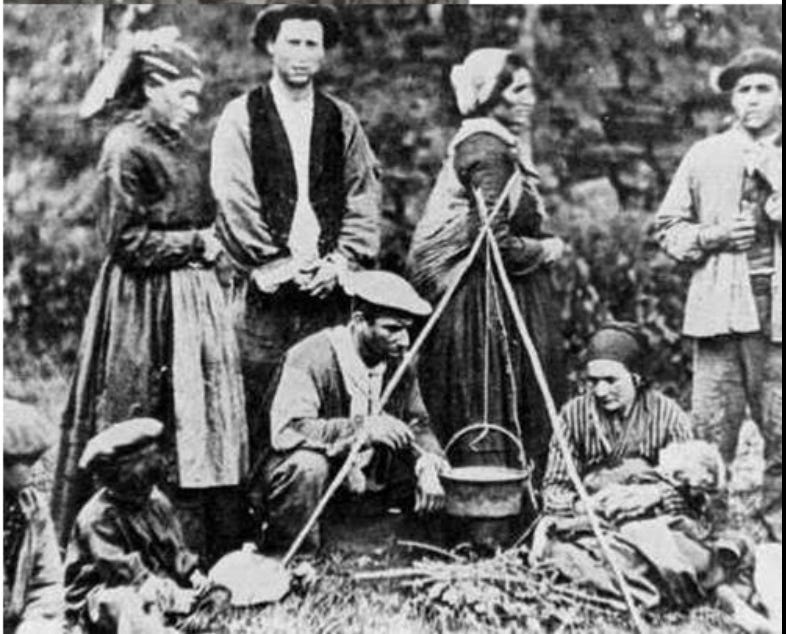
Fig 1. A group of Agotes in Spain sometime around 1900.
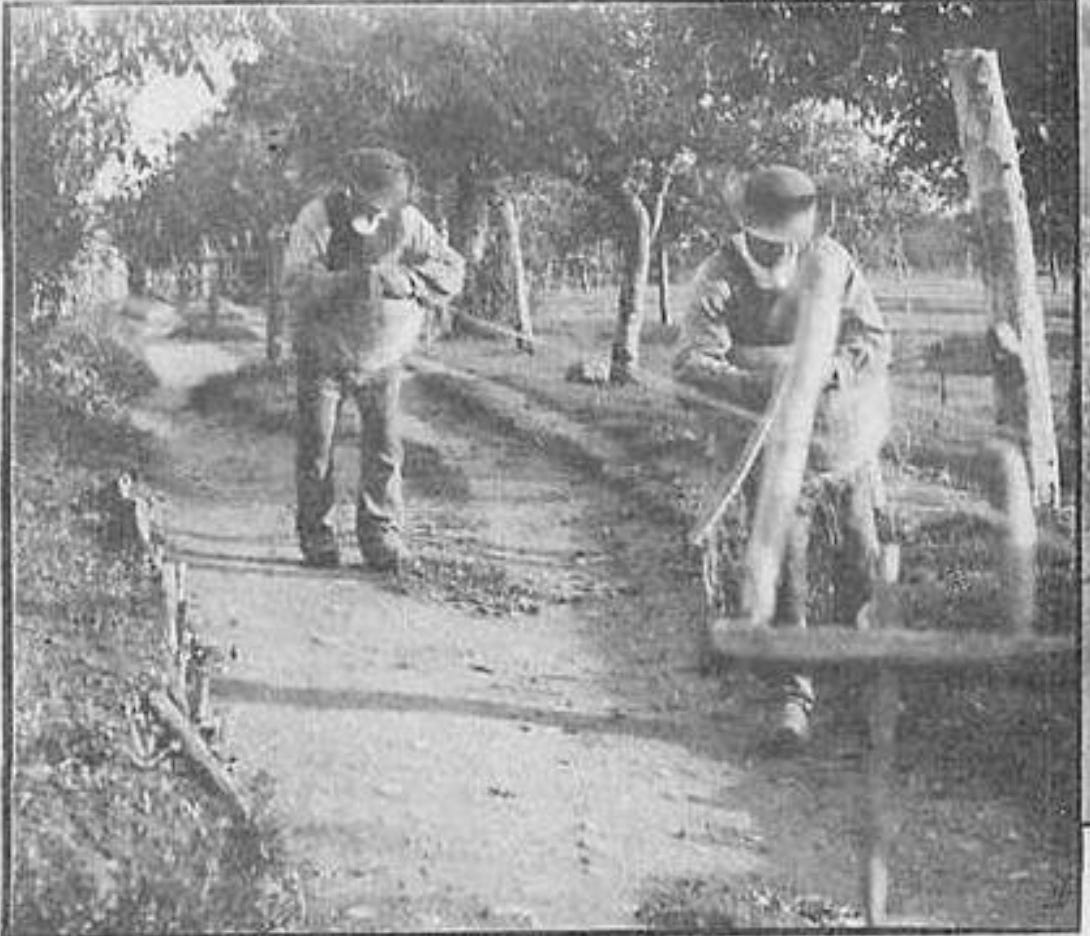
Fig 2. Caquins in Brittany plying their craft.
Other Untouchables
We need to acquire better points of comparison with other known untouchable classes to explain why the French untouchables are so unusual.
Occupations
Almost all the demeaned or untouchable classes I’m familiar with have restrictions on their occupations. In some cases these are formal and legally mediated; in others it’s informal and norm based. Famously, Ashkenazi Jews could certainly socially co-mingle with Christians in most circumstances but they could not own land to farm, and were relegated to urban, white collar professions their Christian neighbors viewed with pious suspicion. These were occupations like finance, tax-farming, or merchants of exotic goods.
The Burakumin are Japan’s untouchables. Like the Ashkenazim in Europe, this group has typically occupied jobs forced on them in part by heredity and in part by the superstitious proclivities of the outgroup that enforced their stigma. In their most enlightened moods, medieval Christians typically viewed usury finance as suspicious at the very least, though necessary for a working credit market. They were too clean to do this work themselves, and the Jews naturally filled in this often monstrously profitable niche. Similarly, Jesus had some trenchant things to say about tax men, sovereigns were too lazy to collect taxes themselves, and tax-farming became a viable business model naturally suited to Jews who could read and do arithmetic.
Burakumin fit this pattern. They worked as butchers, gravediggers, and tanners, the occupations of death and uncleanliness which other Japanese held themselves apart from. India’s Dalit castes also found themselves similarly situated for centuries, trapped in unclean and superstitiously despised professions, literally cleaning the latrines of their betters.
I don’t mean to suggest the stations of these groups were comparable, but in all cases, occupations are intricately tied to the enforcement and perhaps the origins of the class stigma. In the Buraku and Dalit examples, their prospects were terrible and it’s plausible their occupations lay causally upstream of the stigma. The Hindu caste system itself is too ancient to definitively establish whether it was truly occupationally derived, but that’s at least a possibility. This excludes the Ashkenazi example as finance was a despised though profitable, white-collar job, and we know enough about Jewish history to know they weren’t always merchants and financiers.
Contrast this to these French untouchable castes. There’s nothing unclean or sinful about being a carpenter, a cooper, or making ropes. People obviously did those things in a medieval European economy before the associated Cagot and Caquin stigmas. I suspect in this case what’s going on here is that the outgroup exclusion from other occupations acted as a mechanism to enforce the untouchable status in a world with very poor record keeping and communications.
If I were an adventurous Cagot looking to improve my lot in life by moving a few towns over where no one knows I’m part of the stigmatized caste, and I’ve been a woodworker all my life, it would be very difficult for me to support myself starting afresh without my new neighbors realizing I’m a Cagot. So unlike the Dalit and Buraku examples, the occupational association is causally downstream of the stigma.
Religious status
Medieval Christians realized that Jews practiced an older though discredited version of their faith, and certainly viewed them as religiously distinct. With the Indian Dalits, that was not the case. They were a despised part of the Hindu system but they lived and worked inside of that system, not apart from it. Their religious lives were circumscribed, and high castes often threw them out of Hindu temples, but no one could really dispute they were by-and-large actually Hindu. For the Burakumin, it’s slightly more complicated. Death was certainly viewed by Buddhist and Shinto religions as ritually unclean, and people who worked in such were deemed unclean in turn. Therefore, it was superstition itself rather than the occupational dimension that was most causally upstream of the Buraku stigma, which is slightly different than the Indian untouchables; in India it’s unclear how fused the caste system was with Hindu traditions.
In contrast, as we noted before, the French untouchables were Christians. They were baptized, went to church, and took communion. Like the other locals, the priests feared Cagots, wouldn’t approach them for the Eucharist, and circumscribed their rights, but they were Christians all the same. There’s no evidence whatsoever suggesting the stigma was mediated by a religious difference.
One unusual example I had never heard of before doing the research for this subject is a purely religious untouchable caste that originates in Nigeria, the Osu caste. In this situation, the Osu can occupy different status tranches, are not necessarily restricted in their trade, but can be hereditarily tied to specific physical Igbo religious shrines. As far as I can tell, this social exclusion could be the result of subversion against rulers or blasphemy against deities. The boundedness of some Osu individuals to shrines is meant to ward off bad luck for the non-Osu peoples, and the stigma is maintained through this superstition.
Figures 3 and 4 compress this discussion.
Fig 3. Matrix description of various untouchable or excluded groups
Fig 4. Differential causation across the groups between status and occupation
Given the diversity in the social exclusion arrangements presented in these figures, in examining the specific situation of the French untouchables, we need to consider the possibility that the Cagots and the Caquins existed as excluded castes simply because they were the descendants of other Cagots and Caquins.
Without knowledge about their origin, this is completely circular. What model of exclusion explains the pattern of evidence here?
Leprosy
Leprosy is a bacterial disease basically unknown in modern western medicine. It’s so unknown that it actually was featured in an episode of House. It can cause weird, visible deformities in the skin, face, and extremities after a years’ long incubation period. It’s also difficult to transmit person-to-person and transmission usually involves extended domestic or familial contact.
I checked William McNeill’s famous 1976 book, Plagues and Peoples to determine when leprosy had migrated from Asia and the Near East to Medieval Europe, and even then he asserts plainly that the mode of transmission was not precisely understood when he wrote the book. In the past 50 years since the book was written, we’ve discovered it’s very likely transmitted by respiratory droplets. The point is, even disregarding the benighted standards of medieval medicine, understanding patterns of transmission for the disease would have been impossible.
Ancients certainly understood that leprosy was contagious, but they also mistakenly and superstitiously believed the leprosy was highly contagious when there’s excellent evidence now that it is not, even under poor conditions of hygiene. There’s also the issue that medieval people might use “leprosy” as a catch-all term for any condition involving deformity or messed up skin that wasn’t infectious or contagious at all.
In a family, with a leprous mother or father, some children would become lepers and some would not. It would have a variable period of onset, and the symptoms would be idiosyncratic and bizarre. And there’s more.
People have done twin studies on leprosy susceptibility in places where there are an enormous number of people being born and where leprosy is endemic (i.e. India in the 1970’s) and strikingly found 60% infection concordance in monozygotic twins versus 20% concordance in dizygotic twins. The notion that susceptibility to the disease is largely genetically caused has been bolstered by more complex pedigree studies and even GWAS studies with modern designs. I couldn’t find any evidence that the exact patterns of this genetic inheritance are well-understood; for example, is the inheritance at implicated loci, dominant, recessive, or neither? People aren’t so sure about that, but the key insight remains. Susceptibility to leprosy is transmitted in families.
Expulsion
McNeill also discusses leprosaria in Europe, where communities forcibly sent their lepers for treatment and containment. Everyone knows Jesus hung out with lepers, healed them, and thought they were cool, but the medieval communities which practiced this had pretty explicit biblically inspired authority to do so. From Leviticus:
And the leper in whom the plague is, his clothes shall be rent, and his head bare, and he shall put a covering upon his upper lip, and shall cry, Unclean, unclean.
All the days wherein the plague shall be in him he shall be defiled; he is unclean: he shall dwell alone; without the camp shall his habitation be.
and from Numbers:
Command the children of Israel, that they put out of the camp every leper, and every one that hath an issue, and whosoever is defiled by the dead.
McNeill states that the earliest evidence for the arrival of leprosy in Western Europe was from the 6th century and in such a time and place, we have a recipe for lepers being despised, forced to live at the outskirts of town, and potentially shoe-horned into craft careers that didn’t require much social mixing and constrained people from moving. Does any of this sound familiar?
Were the Cagots or Caquins actually lepers?
People have noted there are some suggestive linguistic associations that point in this direction for a long time. For example, 13th-century records referring to Cagots somewhat cryptically denote them as “Chrestiens”; coming back to Jesus, medieval lepers were often euphemistically referred to as pauperes Christi, Christ’s paupers.
There are several other lines of linguistic evidence, but none seem to be granular enough to definitively answer the question here. It’s plausible that the more ancient model for stigmatizing and excluding lepers was simply transplanted onto the treatment of the independently originating French untouchable classes. Just because they were treated the same doesn’t mean they were the same. We need different types of evidence.
A 19th century French physician and public health bureaucrat named Théophile Roussel physically examined Cagots and their putative descendants during a public health campaign in 1847, observed there was no physical difference between them and their neighbors and explicitly rejects the leprosy hypothesis in 1893. He also notes that some 14th century documents explicitly distinguish Chrestias/Cagots from “Gaffets lépreux”, who were actual lepers.
Decades earlier, there was a pair of physicians who got what I believe to be the correct answer to the origin puzzle. One was Victor de Rochas, who, unlike Roussel, was a naval physician and scholar. He had been abroad and actually observed leprosy before making his observations; however, it had been basically extinct in France for centuries where Roussel was working.
After noting the mentioned lexicographical evidence, he states:
Since the beginning of the century there are no longer any Cagots — that is, any pariahs — but only descendants of Cagots. That is not to say the prejudice is entirely erased, or that habit has everywhere laid down its arms. The little doors in the church of many a village are barely blocked up, the little holy-water stoup barely dried out, and the bodies of the last accursed ones barely consumed in the reserved corner of the cemetery. There are still witnesses to these humiliating distinctions, and I have been able to collect their memories.
But it is consoling to add that the prejudices fade in direct proportion to the square of the distances, especially since 1830 … Mixed marriages, which not long ago met with difficulties, now scarcely meet any.
I think it was because he had seen the disease in clinic, he grokked that healthy descendants are consistent with a disease long died out, and this is the key insight. Leprosy gradually died out in Europe (once again, McNeill has some interesting things to say about why that happened!), but given a milieu of biblically-inspired superstition and an epidemiology of unpredictable, familial transmission of leprosy, the untouchable status was extended to medieval French lepers’ descendants. The stigma outlived what it was originally based on.
Tuke was the other physician, an Englishman, who looked into this. He also did some fieldwork and cites de Rochas in 1880.
Mr. Webster believes that the conclusion arrived at by M. de Rochas in his remarkable work on the Cagots, published in 1876, is the true one, and, as I have said, it seems to me that it is extremely probable. This opinion is … that the Cagots were persons at one time regarded as tainted with leprosy, and were therefore obliged to live separate from others, the original cause being now long forgotten, but the prejudice outlives the reason. An examination of those who are descended from the Cagots does not, I need hardly say, help to determine the question … and leaves us at liberty to adopt one which is supported by their past history and the etymology.
There’s strong evidence that Roussel either did not know about de Rochas’ work or if he did, he preferred to intentionally not cite it. His main citation is Francisque Michel’s Histoire des Races Maudites and, revealingly, he calls it in 1893 “the most genuinely learned work published in France on the subject”, which means he probably had never heard of the de Rochas monograph.
Theophile Roussel became pretty famous as a public health official in France, I guess his uninformed, incorrect reasoning became the most influential, and the rest is history.
Rival Explanations
Before the 19th century, there were a variety of origin theories advanced. Some of them were completely ridiculous. The Cagots were descended from defeated Visigoths, or Cathar heretics, or Jews, or Moors who converted to Christianity after defeat at the Battle of Tours. Roussel was a major proponent of the Gothic theory and as far as I know he never was dissuaded from it. It involved bizarre reasoning about hair-colors, skull-measuring, and linguistic stretches like Cagots being some sort of cognate of Chien-de-goths.
De Rocha’s monograph deals with some of this directly, and we know that Roussel knew about these arguments, even if he never substantively engaged with them.
However, the bizarre idea of giving pariahs the Visigoths for ancestors was hardly likely to find favor in a country where those conquerors played the same role and held the same place as the Franks in Gaul.
Remember, the Cagots also existed on the other side of the Pyrenees in Spain. In other words, why would Spaniards (half-Goths themselves, their kings descended from Visigothic royalty) pin Gothic ancestry on their despised outcasts?
This is a good argument, and there are also timing based arguments that pretty decisively refute these ideas, all of which Roussel knew about and never seemed to engage with. In an account about a debate on this subject, we have it on record that
Roussel persists in seeing blond descendants of the Goths in the Cagots of the Pyrenees. But they are in reality very diverse — more often brown than blond … resembling the general population where they live …
Finally one is forced to connect the Pyrenean Cagots with those of Brittany and Wales … and it is impossible to attribute a Gothic origin to the latter.
Genetic Data
Genetic data is eating the world. Tuke and de Rochas used the tools they had, proposed what I consider to be the most likely explanation for the origin of these untouchables, but they certainly didn’t prove that these people are descended from an excluded leprous class.
What about more powerful tools? In 2020, a Spanish team led by Antonio González-Martín went to a town called Bozate with a long history of Cagots (Agotes in Spain) habitation and did genetic sampling from families with the right history to test the relevant hypothesis.
As far as I’m aware, the data itself has not been released and there’s been no related publication. The team did release some high-level results that exclude Moorish, Jewish, or Gothic origins. They basically conclude the group has been endogamous, but with local French and Basque ancestry. They don’t have much to say about the leper hypothesis, but they could if they wanted to, and here’s why.
Consider Krause-Kyora et al., 2018 entitled Ancient DNA study reveals HLA susceptibility locus for leprosy in medieval Europeans. They identify a known HLA SNP that’s known to cause leprosy susceptibility in modern populations that was also prevalent in medieval Danish leper graves. In other words, the genetics hasn’t changed since that time.
As we discussed before, knowledge about the genetic dimension of acquiring leprosy is full of holes, and apart from Krause-Kyora et al.’s work, there are a suite of genes potentially implicated. However, if the French untouchables really were the descendants of leprous families and they really were excluded from marrying out of their enclaves, their descendants should have enriched frequency for leprosy-susceptibility alleles like the ones Krause-Kyora found. This is exactly the data that the Spanish team possesses and could test against.
Are Cagots and Caquins the same?
This was one of the key earlier questions, and I can only speculate. In light of the idea that both groups are healthy descendants from medieval lepers, it seems more likely these groups developed around France from a form of convergent social evolution rather than originating from a single antecedent group that got geographically split in two. I’m certainly not sure, and I don’t think any genetic data exists that would definitively prove it one way or the other.
Coda
The leprosy hypothesis cannot yet be proved. The genetic evidence currently establishes isolation and predominantly local ancestry, not descent from leprous families. It may never be possible to recover the first act of the story.
But the hypothesis explains something the alternatives do not. The untouchables were not religious outsiders, and their work was not intrinsically unclean. They did not remain visibly diseased. Nevertheless they inherited separate doors, neighborhoods, cemeteries, and a prohibition on marriage with neighbors. The social memory was retained.
Medieval observers would have seen a disease that appeared irregularly within families, sometimes years after exposure. They could not have separated contagion, shared household conditions and inherited susceptibility. The conclusion that the taint itself ran in blood would have been wrong, but not irrational. Once written into marriage practices, occupations, and settlement patterns, that superstitious epidemiology became self-reinforcing. Endogamy created the bounded enclave that prejudice had imagined already existed.
The cool thing is that the question is no longer really a historical one. It might be a genetic one, and the data to answer it already exists in a Spanish lab, in the genomes of a few families from a Navarrese hamlet who never got to marry out. If their descendants carry an excess of the leprosy-susceptibility alleles that turned up in more modern Ancient DNA research, then de Rochas was right, Roussel was wrong, and a curse that outlived its own cause by seven hundred years finally gets explained.
Interesting, thanks! You should ask for the data of Gonzalez-Martin et al.