Towards scientific rigor for decentralized science.
When I was eleven years old, I watched my favorite YouTuber surgically implant a magnet into his finger.
In the since-deleted video, beloved mad scientist Cody Reeder covered a neodymium magnet with gold using a homemade electroplating rig. Then he cut open his finger, inserted the magnet, and sutured the wound closed with horsehair he had taken from his own horse.
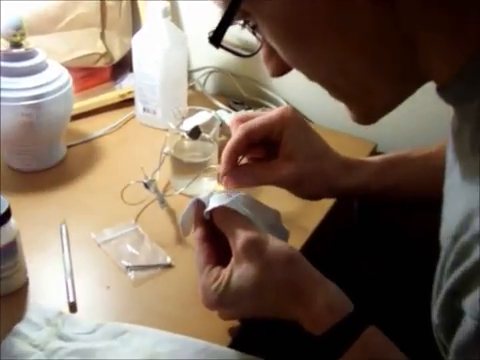
Cody polishes the magnet in preparation for surgery. The beaker contains a gold cyanide solution used to electroplate a thin bioinert coating onto the magnet. Cody’sLab went viral in 2016 for drinking a small dose of cyanide on camera.
The footage is an uncomfortable watch for medical professionals and squeamish laymen alike. The scalpel was chipped, there was no anesthetic, and at one point, Cody dips a mechanical pencil in alcohol and uses its tip to push the magnet deeper into the incision. Being eleven, I thought it was badass.[1] And yet, after the juvenile enthusiasm faded, I was left unsettled, not by the blood or the questionable sterile technique, but by a newfound resentment at the lack of a sense I never had. A sense that wasn’t even human. Like a fish learning about water, I woke to the injustice of my biological limitations, and since then, I’ve considered myself an aspiring biohacker.[2]
Back when I had [a magnet] in the first time […] I became very fond of being able to tell when things were magnetic, you know, feel electricity going through wires without touching them, or determine if an object is metallic iron or not. And now that the magnet is gone, I actually feel blind. […] It’s hard to explain, but I really want the magnet back.
From the Diy Magnetic Implant video by Cody’sLab.
It wasn’t until college that I attended my first biohacking event in meatspace: Grindfest.
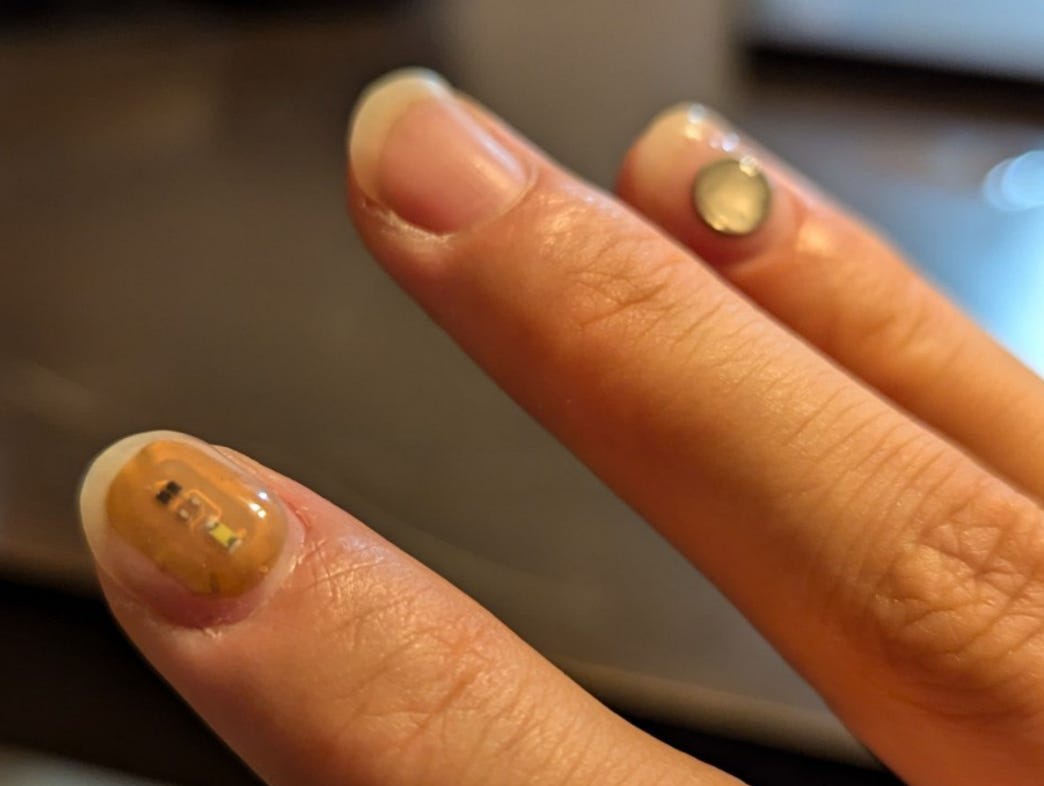
Grindfest attendee Asya gave me a “cyborg manicure” consisting of an LED and magnet under clear nail polish, pictured above. The magnet mimics the function of an implanted one, but with significantly less sensitivity.
With an emphasis on the “meat.” I’ve never been anywhere that made me so acutely aware of the fact that I am made of it.[3] It is one thing to browse pictures and videos of unusual body mods, another to meet a biohacker in the altered flesh and see the LEDs shining from under her skin or from the iris of his prosthetic eye.[4]
On the event grounds was a lab with an attached operating room—picture electronics in varying states of disassembly, bottles of chemicals labeled with Sharpie, and a modified dental chair, all smelling faintly of antiseptic—referred to by one attendee as the ripperdoc clinic. Of the many activities hosted in that space, the most pedestrian were the talks, typically tutorials for useful skills or presentations on personal projects. One such presentation turned out to be extremely memorable for all the wrong reasons.
The tale of the vitamin B guy
The vitamin B guy was an older gentleman, somewhat unkempt and wholly unremarkable. At a place like Grindfest, a person like him might work as a straight-laced government contractor securing municipal systems from cyberattacks, or be a minor celebrity in the BDSM scene for his hook suspension performances, or spend his spare time building terrifying contraptions from disassembled microwaves, or all of the above. This particular individual was presenting a slideshow on the power of vitamin B supplements.
He started the talk with a classic list of vague health complaints—fatigue, brain fog, and the like—and followed up with an equally classic amateur-pharmacologist screed on the necessity of B12 supplements in individuals with certain genetic variants,[5] to which he attributed all of his problems. He then claimed that oral supplements were inadequate, and that intramuscular injections were required, and then proceeded to attribute increasingly incredible benefits to B12. In one alarming anecdote, he said he woke up in the middle of the night in a cold sweat, fumbled for his vitamin shot, and felt instant relief.
Holy shit, I thought. The placebo effect is a hell of a drug.
At this point, he retrieved a giant, crusty, half-empty bottle of injectable B12. He’s been taking a veterinary formulation to save costs, he said. If it’s good enough for racehorses, it’s good enough for him.
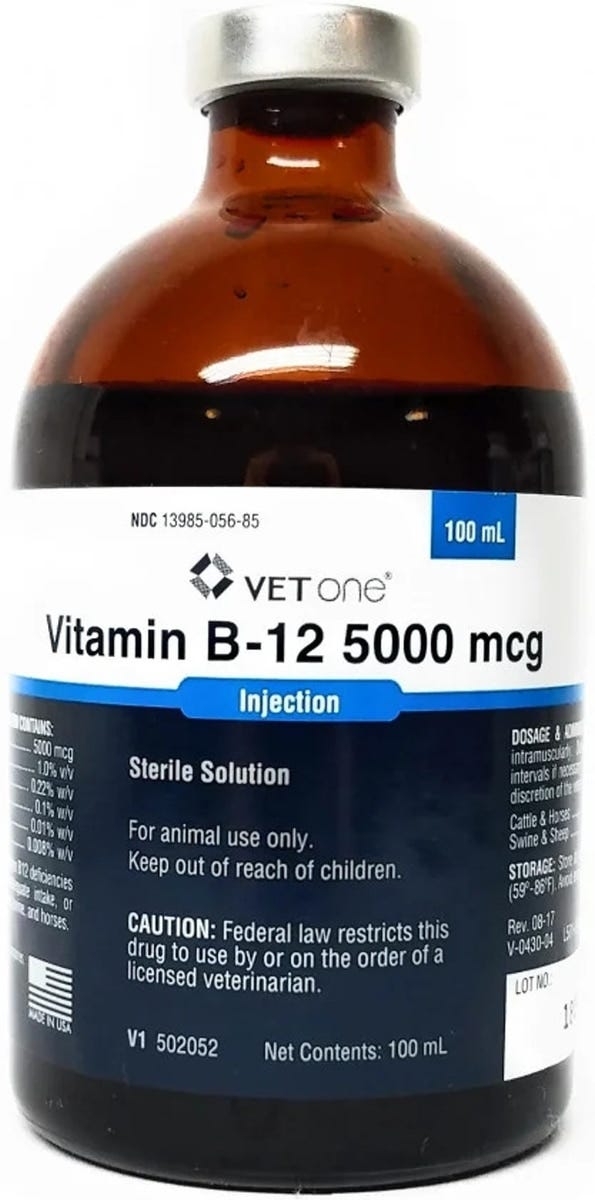
Possibly the brand that vitamin B guy was using, courtesy of Chewy. It’s not uncommon for biohackers to use veterinary supplies for cost or ease of access.
Then he pulled out a handful of needles and syringes, and invited the audience to get an injection on the spot.
It’s perfectly safe, he said, showing off a scar on his leg. He only got an infection once.
An organizer enthusiastically remarked that this was a great opportunity to practice injection technique, and demonstrated on a volunteer. Several attendees lined up to get their B12 shots, placing a remarkable amount of trust in the vitamin B guy’s ability to keep his bottle of horse vitamins sterile for however many months or years he had been drawing from it.[6] The more credible of the B12 recipients reported feeling energized immediately after the shot. I did not get an injection.
During Q&A, I asked the vitamin B guy if he had ever done a blinded test of the injections, to ensure they worked. He didn’t need to, he said, he was certain it worked.
I asked if he had ever screened himself for the genetic variants he blamed his symptoms on. He hadn’t. I asked if he had ever checked his B12 levels.
He hadn’t.
Lessons for biohackers
At Grindfest, I found an undercurrent of contempt for the perceived appropriation of the term “biohacker” by health and wellness gurus. Attendees floated alternate terms, such as “biopunk”, or the OG “grinder,”[7] in an effort to distinguish themselves from the rich, corporate normies seeking to rebrand their turmeric supplements and semaglutide as edgy and transgressive. Having attended biohacking events by the latter type, I can sympathize.[8] But there’s more overlap between the two crowds than some grinders would like to admit. Bryan Johnson comes to mind, the wannabe immortal weird and wealthy enough to make his presence felt at Vitalia, alongside the Augmentation Lab run by Grindfest host Cassox. So does the vitamin B guy.
What makes the wellness gurus derisible is not their lack of appetite for unusual body mods,[9] but their poor scientific literacy and uncritical embrace of woo. Had vitamin B guy simply been taking his supplements on his own, who cares if it’s placebo? But once someone is presenting their ideas in public, they should aim for a higher level of rigor: gather better evidence whenever they can, and disclaim what uncertainty remains. Vitamin B guy could’ve had his genome sequenced, could’ve gotten his B12 levels tested, could’ve done a blind comparison of his injections with saline (even just one test would provide decent evidence on the immediate effects he reported), and at the very least, he could’ve proactively discussed the implications of not having done these things. The biohacking community at Grindfest could’ve been more skeptical of his claims.
Part of the motivation for my stance is practical. The potential harms of overstating the benefits of B12 injections may not be too high, but many interventions promoted among biohackers are much more dangerous.[10] Mostly, though, I just find this embarrassing.
Do you wanna promote an experimental peptide? Think you’ve cured your chronic illness? Have an opinion on a medical controversy? Ask yourself:
Is there anything you can do to further test your claim? Be ambitious. It’s not out of the picture to recruit 20 friends[11] to run a blinded trial on a research drug; even if you’re only experimenting on yourself, you can spend a few months gathering a respectable number of data points. If your claim relies on facts that could be verified through a commercially available blood test, genome sequencing, etc., then go do it.
Is your degree of confidence justified? Can you think of alternate explanations for your observations, or discoveries that could prove you wrong? Disclose where your knowledge falls short. If all you want to do is share an anecdote and some wild speculations, be honest about it and don’t overstate your position.
If you are contradicting expert consensus: do you have an explanation for why the mainstream viewpoint is wrong? That is, why haven’t all the smart people in a position to correct this error noticed it? There are many reasonable answers here and it’s fine to be unsure, but you should think about it. Have you read the arguments supporting the expert consensus? Are you familiar with the history of the field?[12] Have you evaluated the raw evidence yourself, without filtering it through the lens of a person or LLM that agrees with you?[13]

I’m a huge fan of weird people doing weird things. I want to live in a world with mad scientists implanting magnets into their own fingers to reclaim their lost superpowers—though maybe we can promote better surgical techniques. I want to support the self-styled biohackers, citizen scientists, and DIY medicine enthusiasts out there, but some of you people are really hard to support. If you want to do serious science, you have to take yourself seriously. We can do better.
- ^
I still think it’s badass.
- ^
“Aspiring,” because I haven’t gotten an implant yet. Feel free to call me a poser.
- ^
Having written this sentence, I now realize it invites an orgy joke, but I elect to leave it. On the topic of sex, one of the Grindfest attendees created a transparent sounding rod with embedded LED lights that he aptly named “glowwood.” Another attendee got nullification surgery and had a magnet implanted near the residual nerves to explore uncharted territories of pleasure. While I don’t plan on taking advantage of either of these innovations, I admire them.
- ^
Here’s a great clip of Brian fighting in the Wasteland Thunderdome. He put in the same eye for the electric knife fights at Grindfest.
- ^
Which variants? I was sort of lying about the “extremely memorable” claim—I actually only remember the gist of the interaction, not the specific claims he made, though I believe it was a MTRR or MTHFR thing. As you will see, the accuracy of the underlying biochemistry here will turn out to be besides the point. If you are the vitamin B guy or someone else who witnessed this talk at Grindfest, and you think I’m misremembering an important detail, let me know.
- ^
I did watch one of these people identify a bag of mysterious white powder left on the Lost & Found table by snorting it, so maybe the concept of “acceptable risk” doesn’t apply to them.
- ^
“It sounds gay,” one attendee said, “but I don’t mind.”
- ^
Somehow, there’s both more pseudoscience and less respect for the law. I found myself at a talk by a lunatic trying to sell me a “quantum resonator device” that protects against “5G COVID radiation.” Tickets were $100, by the way.
- ^
Though I do find their aesthetic preferences inferior.
- ^
Until you have better evidence to quantify the risks and benefits, assume anything that has the potential to help you has the potential to harm you. A substance seeming “wholesome” or “natural” shouldn’t update you much towards safety when you’re counting on it having large and understudied biological effects.
- ^
The size of a typical Phase I or small exploratory trial. It won’t be huge and there are certainly sampling issues, but it’s achievable for a personal network, and much better than testing on one person. If you have access to a biohacker community large enough to run properly powered trials, that’s awesome, take advantage of that.
- ^
Understanding how the mainstream consensus developed is underrated, and often highly informative.
- ^
If you find yourself ignoring large portions of the evidence base because you lack the background to understand it, that means you don’t know enough about this topic.
I don’t think linking to a page by Bryan Johnson is a good introduction for him. When it comes to his relationship to science, the important thing is to know that we was running a scientific study for his supplements where participants paid money to participate. As part of the participation he promised to release the full data of the study for “open source science”.
The New York Times has an article about negative side effects appearing during the study. Then he decided himself not to release the full data and just write a tweet summarizing the results. The tweet has an embarrassing mistake that looks like it has not been proofread by anyone with domain knowledge.
His olive oil is also an interesting story. Raw at his factory he reports more polyphenols then the polyphenols in the bottles you usually buy elsewhere. However, polyphenols degrade over time. If you measure them at the factory and deliver them to customers months later, they will have less when the bottles arrive. Normally, bottles of olive oil have the harvest written on them, so that you can tell how fresh they are. Bryan Johnson delivers olive oil bottles without a harvest date on them so that you can’t tell how fresh they are.
He talks about the importance of toxicity-testing. To to toxicity testing properly (they way a German supermarket like ALDI does) you need to test every batch. On his website Bryon Johnson often shows one testing page per product, so either he doesn’t to regular testing or is doing the testing and hold back date while pretending to be more transparent then competition because he released on testing sheet.
He does lots of these things, were he can talk about how important toxicity testing is, show you one test result and that looks good if you aren’t thinking more deeply about what’s going on. It takes a bit more reasoning to see the problem then with the Vitamin B guy you describe but the problems are there. It also feels quite sad, because doing the job properly wouldn’t be that much more expensive then what Bryon Johnson does.
When I hear people getting energized, I would also ask for what’s actually going on. There are probably a lot of poisonous injections that make your heart rate and stress levels go up and can be perceived as being more “energized”.
This is no doubt true, however I think the median case of people reporting being energized is:
a) After an oral supplement
b) There is no conceivable mechanism of action which would work so fast.
So, for me when I hear people getting energized, I’m more inclined to ask: “Do you have any emprical data, or hypothetical mechanism of action that would achieve this effect?”. In the median case I expect my interlocutor to have no tenable answer.
On the LLM part, I actually recommend you start by asking an A.I. to push back on your brilliant idea before you recruit 20 friends to test it