The Conservation Ethic in AI 2040
Summary: Halfway through, AI 2040 argues for an extreme conservation success story. How? Why? We should seek to answer these questions now so we don’t make irreversible mistakes.
Like many people, I have been hungrily devouring AI 2040 and the discussion around it. I don’t have much of a horse in the technical accuracy race. Instead, I’m going to focus on this short section tucked away in the prose that made me pause (quoted with edits from[1] here):
The world is basically being divided into three kinds of territory [by 2036]:
Industrial Special Economic Zones: Picture a gigantic strip mine–an artificial Grand Canyon–next to a city-sized factory full of robots and empty of humans.
Arcologies: Picture a tall skyscraper-mall complex surrounded by nature. Good weather, close to beaches and other cities, but not close enough to be blocked by zoning regulations.
Historic & Nature Preserves: Everything else, i.e., 99% of the world. Yosemite, Paris, SF, New York—these places look basically the same as they did in 2025, or 1995 for that matter. A lot more tourists, though. [emphasis mine]
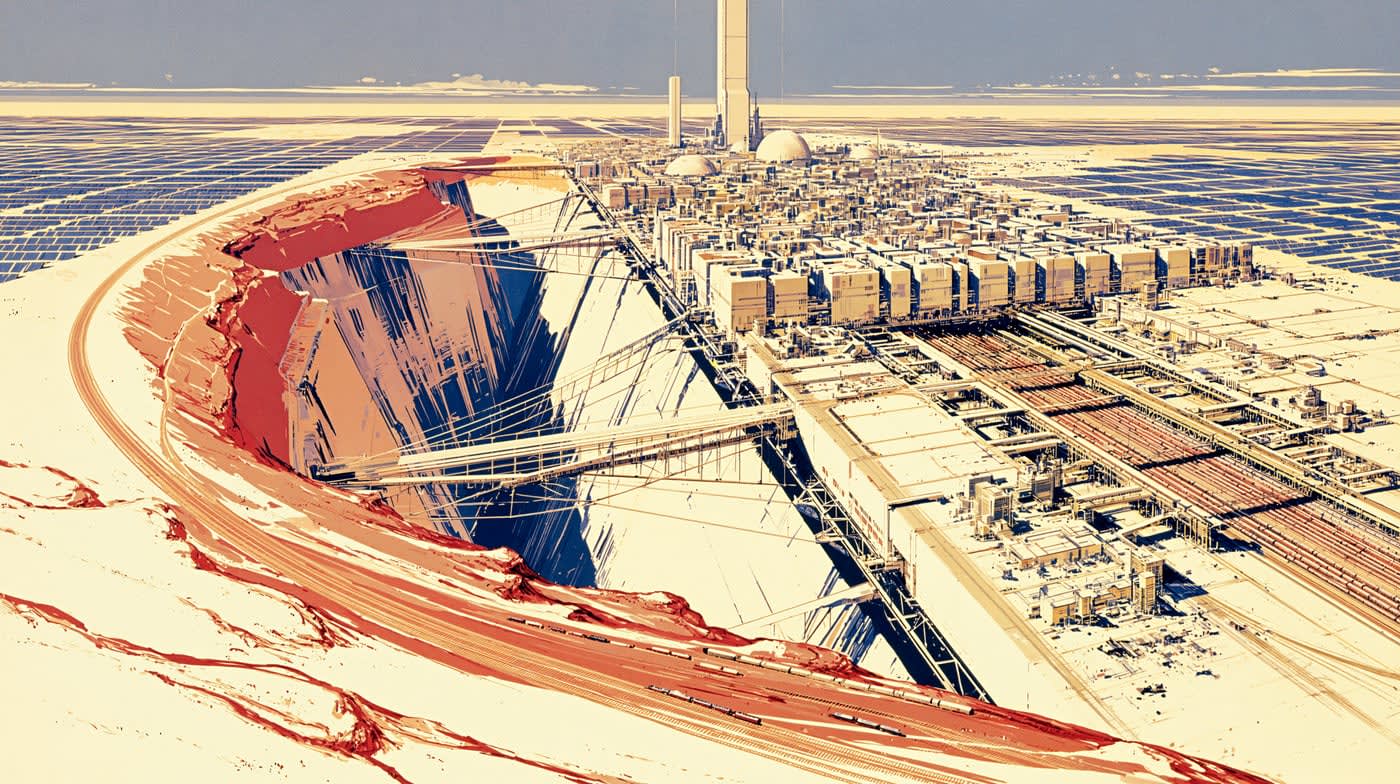
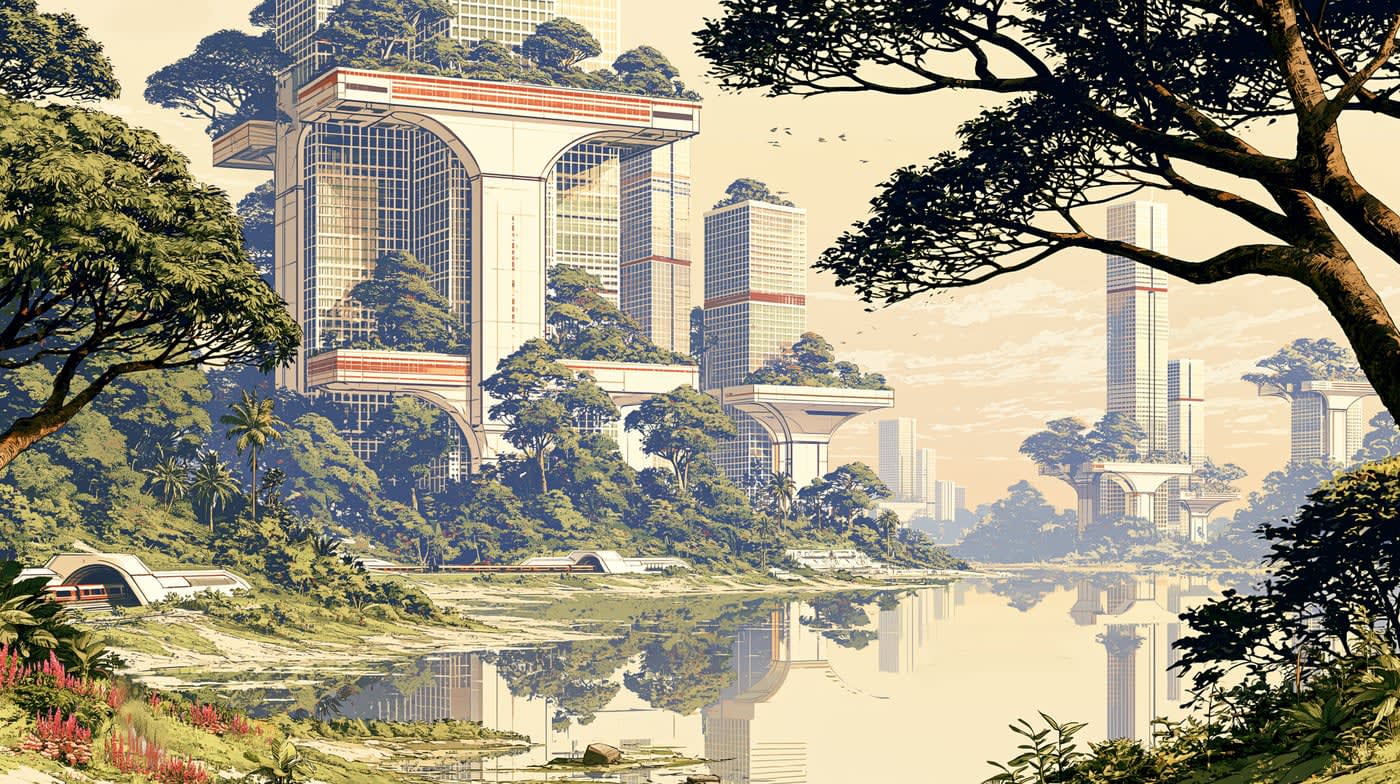
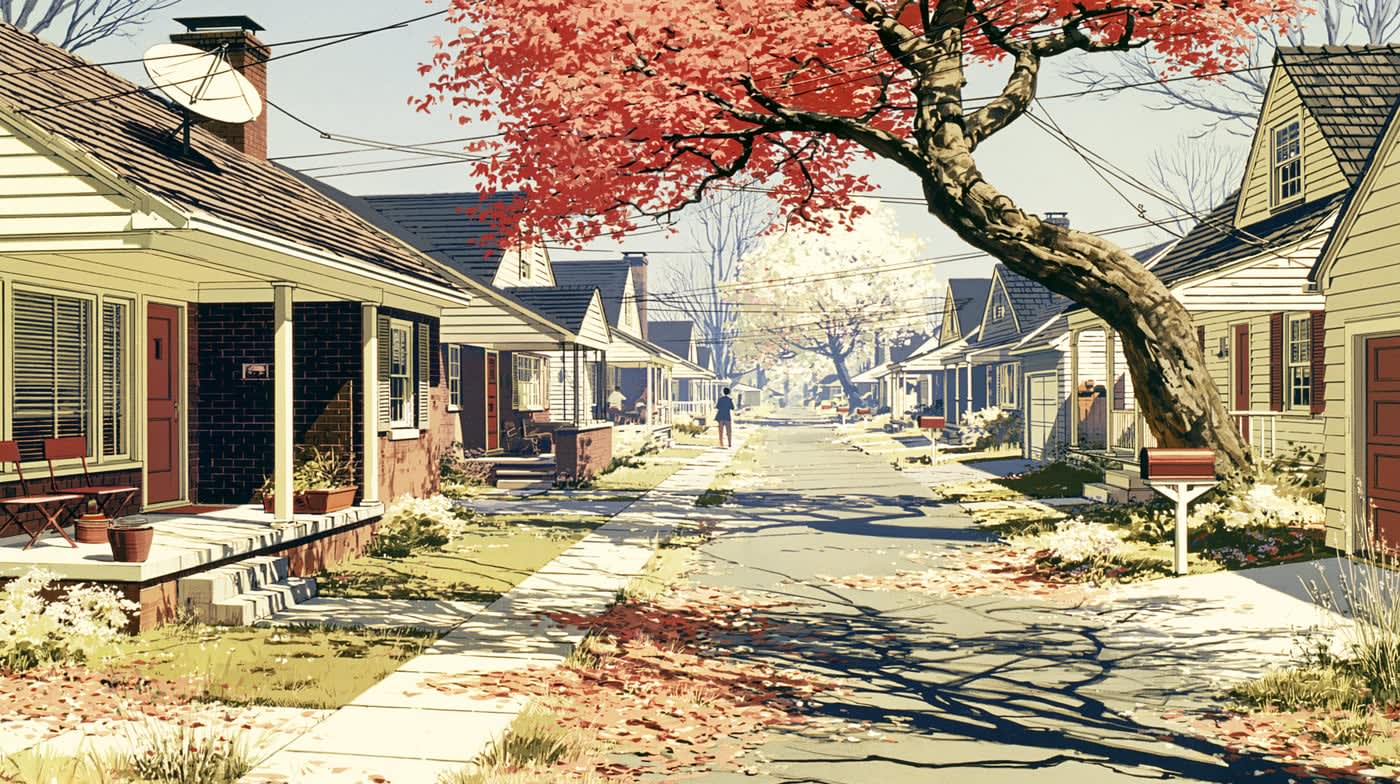
In a present-day where conservation is arduous, expensive, and technically-complex, the AI 2040 authors essentially imply a sudden conservation triumph. 99% of the Plan A world is under a conservation area! Focusing just on natural preserves, currently we’re at 18.43%, the globe is already struggling to hit the 30 percent by 2030 goal[2], and AI 2040 is promising over triple that.
Where did the conservation come from?
This paragraph raises a lot of questions. Indeed, the use of the word “preserve” is an odd one. Are these more like nature reserves (away from people) or more like conservation areas (together with people)?
It is interesting how the authors quickly create an image of the world that is wholly land-sparing instead of land sharing[3] without any further comment. The briefest mention is here:
The robot economy is shifting the bulk of activity to space, so that Earth’s environment and historic spaces will be protected
which is, at best, a bit optimistic (What about all the economic activity that has to happen to physical humans? Doesn’t the movement itself carry significant overhead?). The next-closest argument occurs in the public perspective epilogue, talking about “historical simulation”, which is post-singularity and therefore impossible to argue for/against due to the extreme difference in technological and social organisation.
Who are the people pushing for this, and why would this be achieved so quickly? Why are people moving from these places? What is conserved, in what order, for what purpose, and how is it being carried out?
Option 1: Economic Abandonment
The simplest option for why these preserves exist is that the lack of economic activity in these areas drives people away[4] towards arcologies, which represent the most effective option to survive on their UBI or savings.
The problem with this is that these places require active management. If you do not maintain buildings, their items will rot or break; the walls or roof may collapse; they will be taken back over by nature. Similarly for places like Yosemite, the paths require maintenance; the natural populations need maintenance; both of which require monitoring. These works are often on small budgets with volunteer labor.
The effect would be a mass rewilding but what would result from such an abandonment is not obvious that it is anything of value. It’s hard to suggest that this is in the interests of the average person. Which naturally leads to the second option:
Option 2: Negotiated Conservation
The alternative is that there is some planned or negotiated strategy to remove people from these areas and preserve their modern-day character. Aside from the sinister undertones, the document understates the extent of work required which is probably on the scale of Plan A itself. I don’t know of a current organisation that could step in here. What about people who want to live where they currently live?[5] Who decides whose neighbourhood gets turned into a fulfilment centre? Does the existence of space and distributed aerial transport inherently change the character of a conservation area?
It is tempting to believe that the market can solve this too. What is likely to happen in that case is that the wealthiest communities end up conserved and, in doing so, irreversibly change the historic character of the landscape. A market-based approach here would allow the richest actors to push a given historical viewpoint to the detriment of everyone else.
Can’t AI solve this too?
AI achieves a lot in this vignette so it is tempting to believe that AI can also figure a solution to these problems. Two issues stand out. First, the knowledge to conserve these areas often is not digitised. AI will fail to access local and contextualised ways of working, especially because many communities will actively resist “encroachment” by outsiders. I highly doubt anyone will spin up a successful RL environment with this in mind.
Secondly, the AI physical build-out is relatively resource constrained and a better argument must be put forward for why resources should be spent on physical preservation[6]. These environments will be relatively expensive to work in, by virtue of their historical character, when development in arcologies and SEZs have reducing costs over time.
In brief
These questions are currently barely recognised, questions that are quite important to solve before 2036, with no indication that advanced AI models would make this easier. These projects are projects of cooperation on the scale of Plan A itself which no contemporary organisation is prepared to examine.
That’s not to suggest that the AI 2040 authors should have had answers to all these questions. We may not even get to this point. But for those of you who do want to get there, we should plan what to do before we reach it.
- ^
I’ve copy-pasted it here with the pictures under the assumption that this is OK fair use, if not let me know and I will edit it out.
- ^
Many of these areas are very lightly managed—some may contain industrial activity.
- ^
Two contrasting strategies for conservation (but is a bit more of a continuum):
land-sparing: land is split into high-density industrial value and high-density conservation value
land-sharing: land is simultaneously mixed-density industrial value and conservation value
- ^
This might also explain the use of the word “preserves”, i.e. literally bereft of activity.
- ^
One of your relatives was paid a huge amount to give up their land in a Special Economic Zone.
So maybe this is driven by the market, but what about hold-outs?
- ^
Maybe this could be freed up for human labor, but this creates a whole new can of worms (Are people essentially paid to carry out their typical human life there? A life that is, to them, only a couple of years old?)
What is it humans are currently using the land for, and why? Industry, which is more efficient when concentrated but harder to manage in ways automation can improve. Housing, which can be concentrated very effectively in ways that put people closer to things they care about, for which automation can alleviate many but not all of the downsides. But mostly it’s farming, which can be made a lot more land and chemical and water efficient by bringing it indoors and vertical (if you’re not constrained by electricity and labor).
AI radically alters a lot of the constraints under which these decisions are being made. Specifically, it changes which things are scarce.
One of the many worries is that the greatly increased value AI gains from industrial activity would threaten the biosphere, and having lots of conservation land plausibly elevates the importance and urgency of that.
Yes, I think so too. The directions of land use are hard to predict from the outside—even just for agriculture there’s a lot of differing thoughts about things like animal welfare (considering most agricultural land is grazing land and intensification will make welfare worse), efficacy of vertical farming, release of demand for increased food variety (my personal pet hypothesis). A lot of these questions depend on how much time we spend around take-off without being post-singularity. I also get the impression that whether land is scarce during takeoff is not a settled question, but I don’t have a strong argument on this.
Yes, this is true. Unfortunately these lands require active management, so one has to ask where the capital and labor is coming from. This is doubly true for heritage/cultural conservation because it exists so close to people (who are as a general rule expensive).
These lands are being set aside for a purpose but there is no discussion of what that purpose is other than a vague “good for people”. If it’s primarily tourism that’s a very different argument than ecosystem service (e.g. air quality for humans), or existence value, or option value, or whatever. So good to bring up all these topics now rather than later.
My expectation is no, at least not until after the point where humans don’t get to make the decisions if AI refuses. Mineral and energy scarcity, sure. Insufficient equipment and infrastructure of various sorts, yes. But I don’t imagine AGI or early ASI needing more than 1% of the planet’s surface on the very high end, probably 1-4 OOMs less, and that’s not enough to make land itself scarce.
I think the answer is “more AI.” At least in the sense that if AI can’t handle that, then we’re probably not far enough into takeoff that it’s a pressing urgent need.
I do agree on recognizing the different sources of value, and think people stay vague precisely because they all overlap in messy ways and because building a quorum of stakeholders behind conservation efforts has historically required some strange compromises and contortions. Tourism is often an easy sell at local scale. Ecosystem services are big in aggregate but too diffuse in most cases to be compelling to real decision makers. Existence value appeals to appreciation of the sacred if you can credibly claim such social high ground in the face of near-mode counterarguments. I think option value gets underrated because most people don’t have enough imagination and foresight to anticipate future capabilities or challenges and the needs they might generate.
my read is that currently inhabited regions are already well-modeled as “preserves”, at least relative to the pace of development that the ISEZs and arcologies will experience. their development is limited due to zoning regulations.
This is a good point, but there’s something a little contradictory about this. One of the methods of safeguarding human welfare during the takeoff is strong property rights but arcologies would be designed preferentially to escape planning law. Planning law is designed in principle to protect public goods[1] so this strikes me as a dangerous precedent.
Why are people moving to arcologies? Is it the power of the market, the power of preference, or what? If preserves still have significant economic activity (by being consumers), then the use of the word “preserve” is unusual. Taking the example in the story, if these preserves have a lot more tourism, that requires new infrastructure which inevitably change the character of the landscape.
So in sum (1) Incentivising avoiding the law probably bad on average and (2) does not explain the decisions of people or how these preserves can actually work
Not an invitation to argue about whether it actually does this or not
If someone disagrees with the premise, you’ve made it impossible for them to dispute your conclusion. Neat trick!
You’re more than welcome to disagree with the premise (“Planning law is not designed in principle to protect public goods”). I wanted to avoid opening a dispute about whether planning law is good at doing this or even can achieve it in practice—essentially the arguments from the Abundance movement—because I don’t think it’s an effective path (surfaces cruxes?) in the conversation.
It would be very easy to get in long drawn-out discussion about the ideas from Abundance movement which takes the focus away from AI 2040 and towards modern politics which there’s a bit of a taboo on LW anyway.
I spoke imprecisely, if one wishes to point out that actual bad effects of planning law are more important for assessing its removal than good intent, that is not technically disagreeing with the premise, merely its relevance to the conclusion.
More precisely, you have significantly restricted dissenters’ ability to discuss relevant cruxes. If you feel that political discussion on that level is or should be taboo on LW then it is poor form to raise political arguments while forbidding political replies.
Based on what you’re saying, I think you’d like to argue “Planning law leads to bad outcomes on average, therefore arcologies avoiding planning law is good”. I think this is a good argument.